 ultimate-guide
Natural Alternatives to Harsh Chemical Scalp Treatments
Table of Contents
- Why Harsh Chemical Scalp Treatments Can Backfire
- Benefits of Scalp Detox: Resetting Your Scalp Without Stripping It
- Natural Ingredients That Soothe and Support Scalp Health
- DIY Scalp Care vs. Professional Treatments: What Works Best
- Microscopy Scalp Analysis in Bonita Springs: Seeing Beneath the Surface
- Scalp Wellness Services in Southwest Florida: A Holistic Approach
- Holistic Hair Treatments Near Naples: What to Expect
- Frequently Asked Questions
Last Updated: October 2, 2026
Why Harsh Chemical Scalp Treatments Can Backfire
Many people reach for a strong clarifying shampoo or a medicated scrub when their scalp starts flaking, itching, or feeling tight. That instinct often makes things worse. Alternatives to harsh chemical scalp treatments exist for a reason: the scalp is skin, and it has a protective barrier that aggressive formulas can strip away. (Source: the scalp's acid mantle)
Many people experience this pattern after cycling through various shampoos and clarifying treatments without relief.
Signs Your Scalp Is Reacting to Harsh Ingredients
- Persistent tightness or burning after washing
- Flaking that returns within a day or two
- Redness along the hairline or part line
- Increased shedding during and after shampooing
- Itch that worsens at night
If shedding is sudden, patchy, or accompanied by pain or open sores, that is a signal to see a dermatologist rather than treat it at home.
Benefits of Scalp Detox: Resetting Your Scalp Without Stripping It
A gentle scalp detox supports the scalp's natural balance rather than forcing it. The goal is to lift buildup from sebum, dead skin, and styling products while leaving the lipid barrier intact.
What a Gentle Detox Actually Does for Your Scalp
A well-formulated detox can help clear follicle openings, reduce flaking, and calm irritation without triggering the rebound oiliness that harsh stripping causes. Look for exfoliation that is physical and mild, such as bamboo powder or fine sea salt, paired with soothing agents like aloe, glycerin, or sweet almond oil. Cold-pressed botanical oils bring essential fatty acids that support the scalp barrier, while prebiotic and probiotic ingredients can help feed a healthier scalp microbiome.
Natural Ingredients That Soothe and Support Scalp Health
The most effective natural ingredients for scalp care tend to be anti-inflammatory, antifungal, and non-comedogenic. What separates a helpful botanical from a marketing claim is whether it does something measurable on the scalp: calming redness, disrupting yeast overgrowth, restoring moisture, or supporting the acid mantle.
How the Acid Mantle Fits In
A healthy scalp sits at roughly pH 4.5 to 5.5. That slightly acidic film is what keeps moisture in and irritants out. Many conventional shampoos, especially clarifying and anti-dandruff formulas, run more alkaline, and repeated use can push the scalp above its natural range. When that happens, the barrier weakens, moisture escapes, and the scalp can become reactive.
Botanicals That Calm and Support
- Green tea, rich in polyphenols that help calm irritation and support a balanced scalp environment
- Chamomile, soothing for reactive, sensitive scalps
- Basil leaf, traditionally used to calm irritation and support circulation
- Aloe vera, hydrating and cooling, useful after exfoliation
- Neem, antifungal properties that can help with flaking
- Tea tree, antifungal and antibacterial; effective but strong, so dilute and patch-test
Carrier Oils and Essential Oils
Essential oils for scalp irritation, including lavender, rosemary, and peppermint, should always be diluted in a carrier oil. A common guideline is about 1 to 2 drops of essential oil per teaspoon of carrier oil for a sensitized scalp. Rosemary in particular is often used to support follicle health, though it is not a treatment for medical hair loss.
The Transition Period Most Guides Skip
When you stop using harsh chemical treatments and switch to gentler, more natural care, the scalp often goes through a transition phase. Sebum production can temporarily overcorrect, flaking can increase, and the scalp may feel oilier or itchier than before. This is normal, and it is the single most common reason people abandon natural care and go back to the stripping shampoo.
How to Read Labels and Spot Harsh Chemicals
- Sulfates such as sodium lauryl sulfate and sodium laureth sulfate
- Parabens and synthetic fragrances
- High concentrations of denatured alcohol
- Formaldehyde-releasing preservatives
When in doubt, look for sulfate-free and paraben-free formulas with recognizable botanical ingredients near the top of the list.
DIY Scalp Care vs. Professional Treatments: What Works Best
DIY scalp care works well for maintenance. Professional treatment works better when you need an accurate read on what is actually happening on your scalp. The honest answer is that these two approaches are not competitors, they do different jobs. (Source: anti-inflammatory and antifungal properties)
What DIY Does Well
Home care is about consistency, not intensity. A weekly oil mask, a gentle rinse, and a sulfate-free shampoo cover most maintenance needs. The trade-off is that DIY relies on you correctly identifying what your scalp needs. Many people misread dandruff when the real issue is a dry, compromised barrier, or treat dryness when the scalp is actually congested.
What Professional Care Adds
Professional scalp care adds three things DIY cannot easily replicate: magnification, customization, and a trained eye. A microscopy scalp analysis shows buildup, redness, flaking, follicle density, and hair shaft condition that the naked eye cannot detect. From there, a customized plan can target what is actually present rather than what you assume is present.
| Approach | Best For | Limitations | Time Investment |
|---|---|---|---|
| DIY oil masks and rinses | Mild flaking, maintenance | Hard to target root cause | 20-30 minutes weekly |
| Drugstore sulfate-free shampoo | Daily gentle cleansing | Limited exfoliation | Daily |
| At-home exfoliating scrubs | Product buildup | Can irritate sensitive scalps | Weekly |
| Professional scalp detox | Persistent buildup, irritation | Requires appointment | 45-60 minutes |
| Microscopy scalp analysis | Unexplained shedding or thinning | Diagnostic tool, not a treatment | 30-45 minutes |
The Cost-Benefit Reality
DIY options can be cost-effective per session. Professional care involves a per-visit cost, but it can offer targeted solutions that may prevent prolonged trial-and-error with products.
Patch-Testing Before You Commit
Before layering a new DIY remedy onto a sensitized scalp, patch-test it. Apply a small amount behind the ear or on the inner forearm, wait 48 hours, and check for redness, itching, or swelling. Essential oils, botanical extracts, and even some carrier oils can trigger reactions, and a sensitized scalp reacts faster than healthy skin.
When DIY Is Not Enough
If flaking, itching, or shedding has not improved after a few weeks of consistent gentle care, or if shedding is sudden, patchy, or accompanied by pain or open sores, that is a signal to stop experimenting at home and get a professional evaluation. Some scalp concerns fall outside the scope of cosmetic care and warrant a referral to a dermatologist or physician.
Microscopy Scalp Analysis in Bonita Springs: Seeing Beneath the Surface
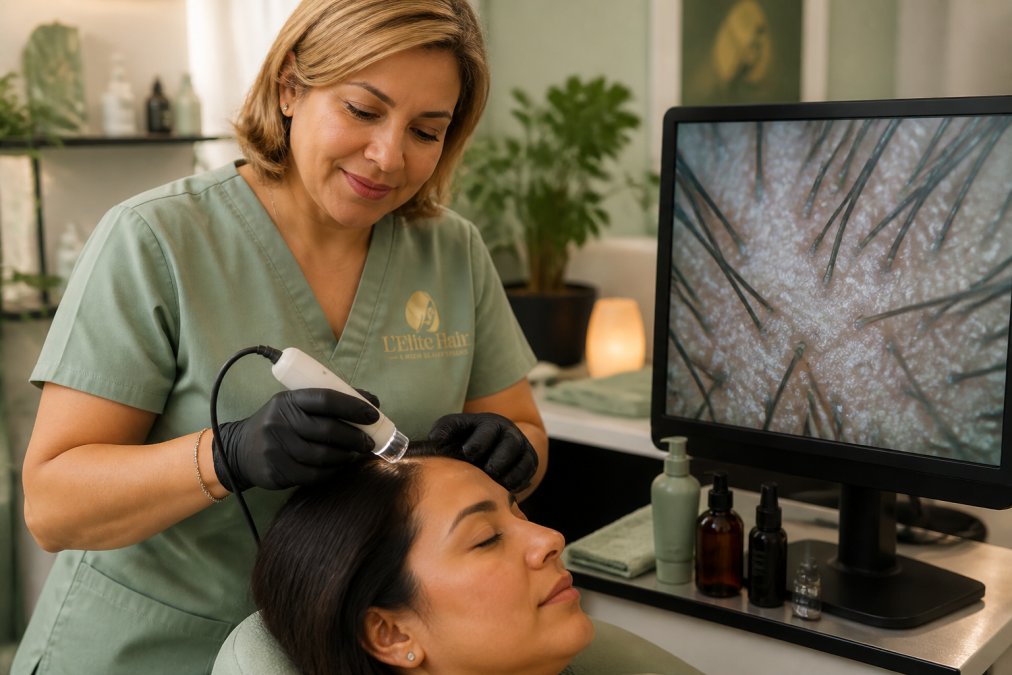
Microscopy scalp analysis in Bonita Springs uses a magnified camera to examine the scalp and hair follicles up close. It shows buildup, redness, flaking, follicle density, and hair shaft condition that the naked eye cannot detect.
Scalp Wellness Services in Southwest Florida: A Holistic Approach
Scalp wellness services in Southwest Florida range from simple consultations to full treatment sessions. A holistic approach looks at the whole picture: your hair care routine, stress levels, medications, water quality, and styling habits.
Holistic Hair Treatments Near Naples: What to Expect
Holistic hair treatments near Naples typically begin with a consultation and scalp assessment. From there, a customized plan may include deep scalp detox, herbal scalp treatments, LED hair therapy, and Japanese Head Spa or Indian Head Massage for relaxation and circulation.
Frequently Asked Questions
What is the best natural scalp treatment?
The best natural scalp treatment depends on your specific scalp condition. Gentle exfoliation with cold-pressed oils, apple cider vinegar rinses (diluted), and botanical extracts like aloe vera or tea tree oil can help soothe irritation and remove buildup. For personalized recommendations, a professional scalp analysis can identify your scalp's unique needs and guide you toward the most effective natural options.
What deficiency causes scaly scalp?
Scaly scalp can be linked to deficiencies in essential fatty acids, zinc, or B vitamins, but it is often caused by conditions like seborrheic dermatitis or psoriasis. A balanced diet supports scalp health, but persistent scaling should be evaluated by a dermatologist or trichologist to rule out underlying medical issues. Natural treatments can help manage symptoms, but they do not replace medical diagnosis.
How to get rid of severe scalp buildup?
Severe scalp buildup often requires a combination of gentle exfoliation and professional detox services. At-home, use a sulfate-free exfoliating shampoo with ingredients like charcoal or sea salt, and avoid heavy styling products. For stubborn buildup, a deep scalp detox performed by a professional can safely remove debris and restore balance without stripping natural oils. Regular maintenance helps prevent recurrence.
What naturally kills bacteria on the scalp?
Natural antibacterial agents like tea tree oil, neem, and apple cider vinegar can help reduce bacteria on the scalp. However, the scalp has a delicate microbiome that benefits from balance rather than complete sterilization. Overusing antibacterial remedies can disrupt this balance. For persistent odor or infection, consult a healthcare professional. Professional scalp treatments often incorporate gentle botanical extracts to support a healthy scalp environment.
What are the benefits of choosing natural scalp treatments over chemical-based ones?
Natural scalp treatments tend to be gentler on the scalp barrier, reducing the risk of irritation, dryness, and allergic reactions. They often support the scalp's natural pH and microbiome, promoting long-term scalp wellness. While chemical treatments can be effective for specific conditions, they may strip natural oils and cause rebound oiliness. Natural alternatives focus on soothing and nourishing, making them suitable for sensitive or compromised scalps.