 listicle
Signs You Need a Professional Scalp Detox: 2026 Guide
Table of Contents
- What a Professional Scalp Detox Actually Does
- Signs of Scalp Buildup You Should Not Ignore
- When Shedding and Thinning Signal It Is Time for Help
- How Microscopy Scalp Analysis Guides Your Treatment
- Japanese Head Spa Benefits for Stressed, Congested Scalps
- Professional vs. At-Home Scalp Detox: What to Know
- When to Book a Professional Hair Loss Consultation
- Frequently Asked Questions
Last Updated: September 18, 2026
What a Professional Scalp Detox Actually Does
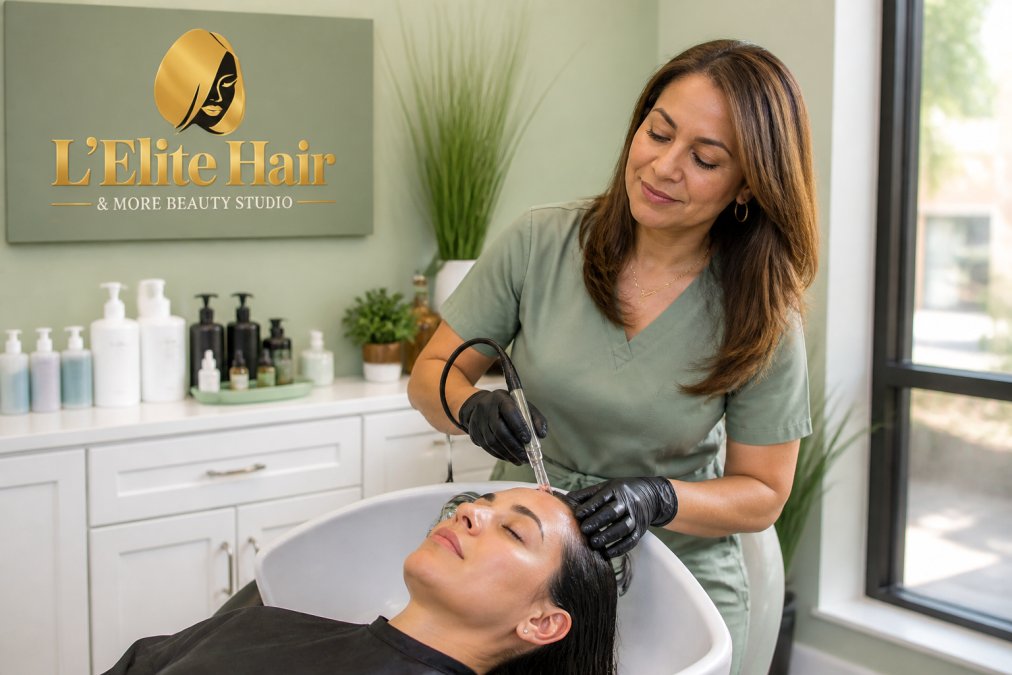
A professional scalp detox is a studio-based treatment that clears product buildup, excess oil, and dead skin cells so follicles can function in a cleaner environment. At L'Elite Hair & More Beauty Studio, we see this as scalp care first and hair care second, because healthy-looking hair starts with a balanced scalp. (Source: the American Academy of Dermatology)
Most guides treat a detox as an intense shampoo. It is closer to a reset for the scalp's surface, using professional-grade cleansing, exfoliation, and massage a drugstore rinse cannot replicate. The scalp is skin; when residue sits on it for weeks, oil production, pH balance, and barrier function drift out of range.
The signs you need a professional scalp detox rarely appear as one dramatic symptom.
Signs of Scalp Buildup You Should Not Ignore
The clearest signs of scalp buildup are greasy roots within a day of washing, persistent itching, visible flaking, and hair that feels heavy or coated at the base. One or two is normal; four or more, week after week, is your scalp asking for help.
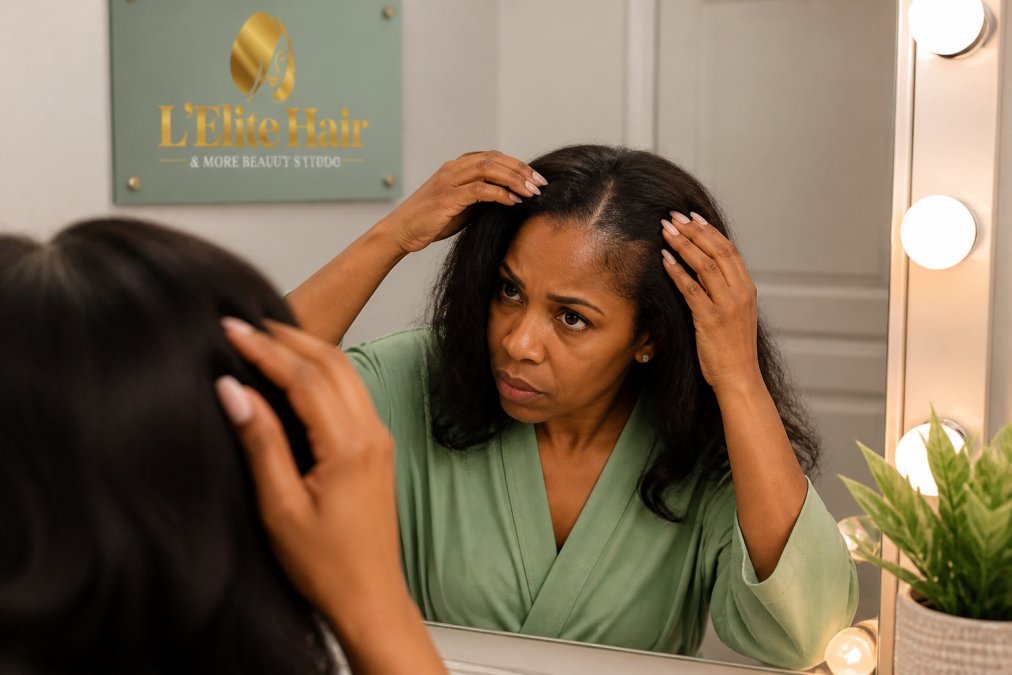
Watch for these signals:
- Roots that look oily hours after washing
- Itching or a tight, tender feeling at the crown
- Flaking that resembles dandruff but returns quickly
- Hair that has lost volume and feels flat at the base
- A faint odor, even after a fresh wash
- Scalp tenderness when you move your hair
When Shedding and Thinning Signal It Is Time for Help
Losing hair is normal. Losing noticeably more than usual, for weeks, is not. Most people shed a steady number of hairs daily as part of the growth cycle; when shedding climbs and stays elevated, the cause may be worth investigating (the American Academy of Dermatology).
Understanding the Hair Growth Cycle
The hair growth cycle has three phases: growth, transition, and rest. In the resting phase, hairs release and shed, so some daily loss is expected. What matters is the pattern: a sudden spike in shedding, thinning along the part, or a widening part line points to something disrupting that cycle.
How Microscopy Scalp Analysis Guides Your Treatment
Microscopy scalp analysis magnifies the scalp and follicles with a specialized camera to reveal buildup, redness, flaking, and follicle density up close, turning guesswork into a plan.
What the analysis typically reveals:
- Where buildup is concentrated
- Whether oil production is high, low, or mixed across zones
- Signs of scalp inflammation or sensitivity
- Relative hair density and follicle health
- Whether the scalp barrier looks compromised
Japanese Head Spa Benefits for Stressed, Congested Scalps
The Japanese Head Spa benefits come from layering several techniques in one session: scalp analysis, gentle exfoliation, warm-water and steam softening, targeted massage, and a finishing cleanse. Together they support a cleaner, calmer scalp environment.
Here is the mechanism, step by step.
- Exfoliation lifts dead skin cells, styling residue, and dry shampoo film ordinary shampoo leaves behind, addressing follicle congestion at the surface.
- Warm water and steam soften hardened sebum so it releases without aggressive scrubbing, helpful for scalps that react to friction.
- Targeted massage eases the tight, tender feeling many people carry at the crown and hairline, and supports scalp circulation.
- A finishing cleanse rinses away what the earlier steps loosened, so residue does not settle back onto the scalp.
What the Scalp Microbiome Has to Do With It
The more useful frame is the scalp microbiome, the community of microorganisms on the scalp surface that helps keep it balanced. When oil, dead skin, and product residue accumulate, that environment shifts. Some people notice itching, flaking, or a faint odor; others notice nothing until shedding or dullness shows up.
Who Should Be Careful
A head spa is gentle, but not right for every scalp on every day. Considerations for certain conditions include: (Source: the National Institutes of Health (NIH))
- Active eczema or psoriasis flare: exfoliation and heat may aggravate inflamed patches. It is advisable to wait until the flare settles, and check with a dermatologist first.
- Open sores, cuts, or a recent chemical burn: it is recommended to skip the service until the skin has healed.
- Essential-oil sensitivity: some herbal and aromatherapy blends contain ingredients that may irritate reactive scalps. It is important to tell your specialist about past reactions before the service begins.
- Recent chemical service: if you have had a relaxer, color, or keratin treatment in the last week or two, it is advisable to ask whether the timing is right. Warm water and massage are usually fine, but exfoliation may need to wait.
What It Does Not Do
Professional vs. At-Home Scalp Detox: What to Know
An at-home routine can maintain a healthy scalp, but it rarely resolves significant buildup on its own. Home care handles upkeep; professional care handles the reset.
| Factor | At-Home Detox | Professional Scalp Detox |
|---|---|---|
| Buildup removal | Surface level | Deeper, targeted |
| Diagnosis | None | Microscopy scalp analysis |
| Product match | Trial and error | Chosen for your scalp type |
| Risk of irritation | Higher with overuse | Managed by a specialist |
| Ingredient screening | You read the label | Specialist flags contraindications |
| Best for | Maintenance between visits | Congested, reactive scalps |
Ingredient Safety: What Most Guides Skip
Some ingredients in at-home detox products suit one scalp and harm another.
- Salicylic acid: helpful for oily, congested scalps, but it can sting on eczema or psoriasis patches. If your scalp is inflamed, this is not the week to try it.
- Tea tree oil: a common anti-itch ingredient, but it can trigger contact dermatitis in people with sensitive skin. Patch-test first.
- Peppermint and menthol: the cooling tingle feels like it is working, but on a reactive scalp it can amplify irritation rather than calm it.
- Physical scrubs with coarse salt or sugar: the grit can micro-abrade an already compromised scalp barrier. Fine-grained exfoliants are gentler.
- Sulfate-heavy clarifying shampoos: effective at stripping residue, but they can also strip the scalp barrier if used too often. Once a week is usually plenty for most people; more can backfire.
Post-Detox Maintenance: The Step That Protects Your Results
A detox is a reset, not a finish line. What you do in the weeks after can influence how long results last. A simple routine that may support results for many clients:
- Wash on a consistent schedule. If you were washing every three days, keep that rhythm. Skipping washes after a detox lets oil and residue rebuild quickly.
- Keep conditioner off the roots. Apply from mid-shaft to ends. Conditioner at the scalp is one of the most common causes of fast-return buildup.
- Limit dry shampoo. It is convenient, but it layers. Use it sparingly and wash it out within a day or two.
- Rinse after workouts. Sweat and salt left on the scalp feed the same buildup cycle you just cleared.
- Exfoliate gently at home once a week at most. More is not better.
- Book a follow-up based on your scalp, not the calendar. Some clients return every four to six weeks; others stretch to eight or ten. Your specialist can tell you what fits your scalp type.
Cost and Time Considerations
Professional scalp care is an investment, and pricing varies by studio, service, and treatment length. The fair comparison is value per result: a drugstore product that does not work may result in money spent twice, once on the bottle and again on a professional visit.
When to Book a Professional Hair Loss Consultation
Book a professional hair loss consultation when shedding, thinning, or scalp discomfort has lasted more than a few weeks, or when you cannot tell whether the problem is buildup or something deeper. That appointment is where education replaces worry.
American Academy of Dermatology guidance on hair loss
Frequently Asked Questions
How do you know if your scalp needs a detox?
Common signs include persistent itching, greasy roots shortly after washing, visible flaking or dandruff, dull or heavy hair texture, and a scalp that feels tight or tender. You may also notice increased shedding or a lingering odor even after shampooing. If these signs persist despite regular washing, a professional scalp detox can help clear buildup and support a healthier scalp environment.
Is a professional scalp detox worth it compared to an at-home scrub?
A professional scalp detox goes deeper than a home scrub because a trained specialist can assess your scalp with microscopy scalp analysis, identify specific concerns like excess sebum or follicle congestion, and customize the treatment accordingly. Home scrubs can help with surface exfoliation, but they cannot address underlying imbalances or provide personalized guidance for ongoing scalp wellness.
How often should you detox your scalp?
Frequency depends on your scalp type, lifestyle, and how much product you use. Many people benefit from a professional detox every four to six weeks, while those with oily scalps or heavy styling routines may need it more often. A scalp wellness consultation can help determine the right schedule for your individual needs and hair goals.
Can a scalp detox help with hair thinning or excessive shedding?
A professional scalp detox supports scalp wellness by removing buildup that can congest hair follicles and create an environment where shedding may worsen. While it does not treat medical hair loss conditions, it can help maintain a healthy scalp environment that supports healthy-looking hair. If you experience sudden or unexplained shedding, consult a licensed healthcare professional or dermatologist.