 how-to
How to Check Scalp Health: 7 Signs You Shouldn't Ignore
Table of Contents
- Why Scalp Health Comes Before Hair Health
- What You'll Need for a Scalp Health Check at Home
- Signs of an Unhealthy Scalp You Should Not Ignore
- How to Tell Which Scalp Type You Have
- What Happens During a Professional Scalp Analysis
- When to See a Dermatologist for Scalp Problems
- Common Mistakes People Make When Checking Scalp Health
- Conclusion: Your Next Step Toward a Healthier Scalp
- Frequently Asked Questions
Last Updated: October 8, 2026
Why Scalp Health Comes Before Hair Health
Your hair is a fiber. Your scalp is living tissue. That single difference explains why hair problems so often start at the root, not the ends. Learning how to check scalp health is the first real step toward understanding why your hair behaves the way it does, and it takes only minutes to do at home.
At L'Elite Hair & More Beauty Studio, we treat the scalp as the foundation. A scalp that stays clean, balanced, and calm supports healthy-looking hair. A scalp that stays irritated, congested, or dry rarely does.
The American Academy of Dermatology's guidance on scalp and hair care makes the same point: hair grows from follicles inside the scalp, so scalp condition shapes the environment hair grows in. That is why we teach clients to look at the scalp first, then the hair.
Below, we walk you through a simple 5-minute home check, the signs worth watching, and when to bring in a professional.
What You'll Need for a Scalp Health Check at Home
You do not need a salon or a lab to run a basic scalp check. You need good light, clean hands, and about five minutes.
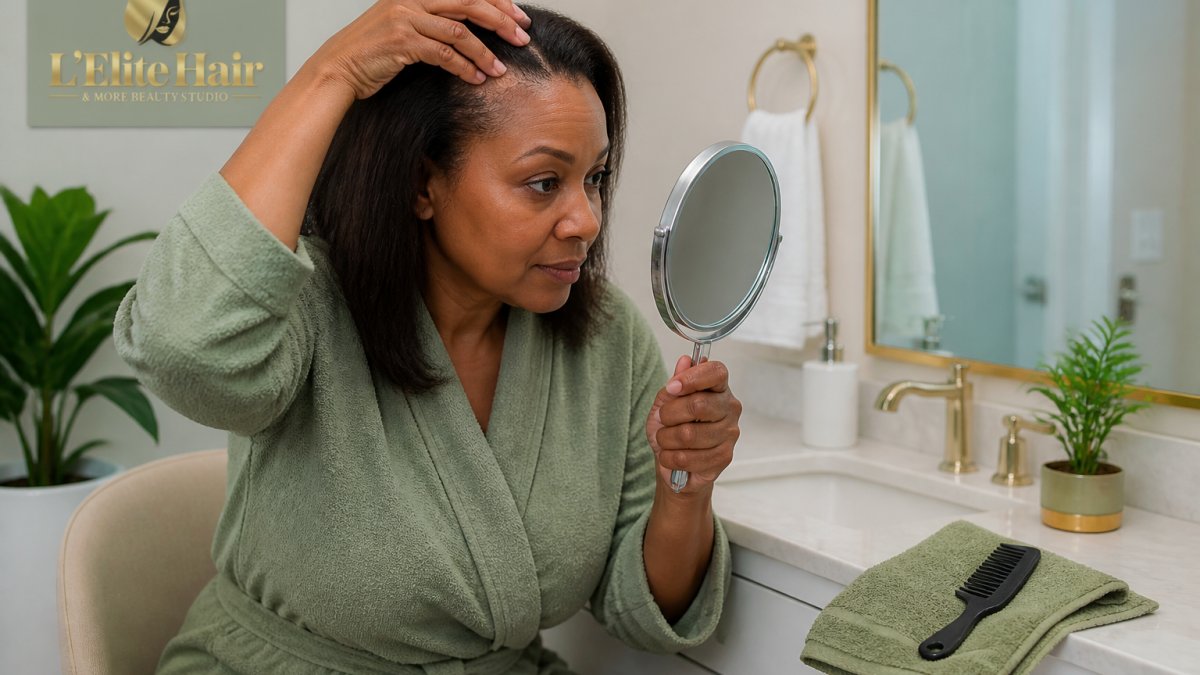
Gather these items:
- A hand mirror plus a wall mirror for angles
- A comb or wide-tooth pick for parting
- Bright, direct light, ideally near a window
- A clean towel or cotton pad
- A phone camera for close-up photos
Your 5-Minute Home Scalp Checklist
Work through these steps in order. Take a photo at each stage so you can compare over time.
- Part your hair in four sections: front, crown, sides, back
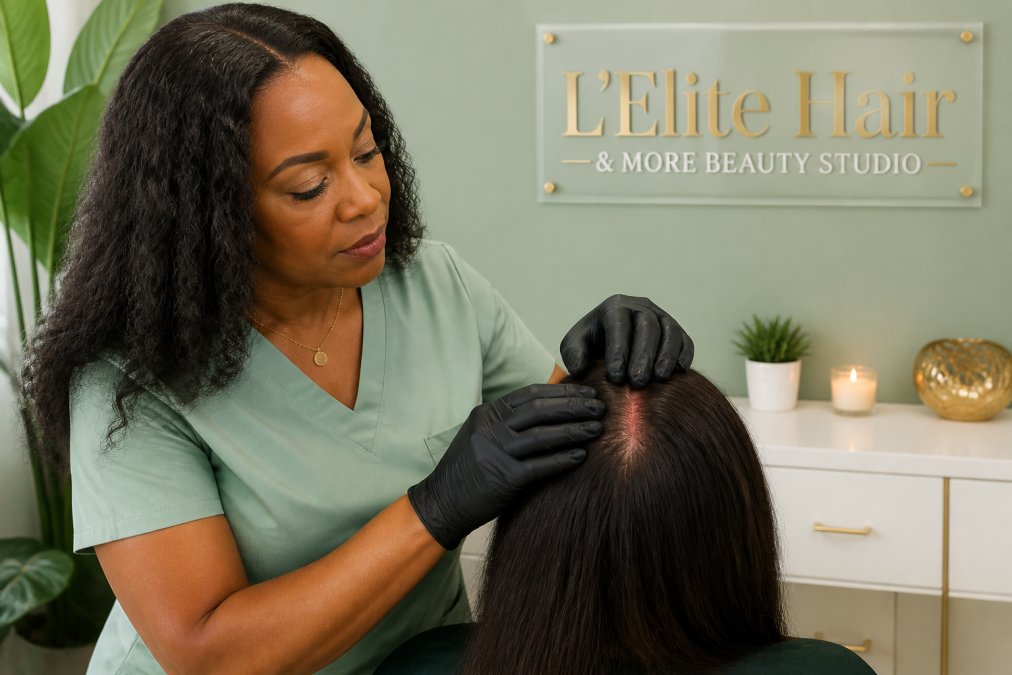
- Check for redness, flaking, or crusting along each part line
- Look for tenderness, bumps, or scabs when you touch the scalp
- Note any areas of thinning or a wider part than usual
- Feel for oiliness, dryness, or a waxy buildup
- Count how much hair sheds on your comb or towel
- Write the date and your findings in a notes app
Signs of an Unhealthy Scalp You Should Not Ignore
A healthy scalp feels comfortable and looks clean. An unhealthy one sends signals you can see and feel.
Watch for these signs:
- Persistent flaking or crusting that returns after washing
- Redness or irritation along the part lines
- Sores, scabs, or tender spots that do not heal
- Sudden or heavy shedding in the shower or on your pillow
- A widening part or visible thinning at the crown
- Itching that never fully settles
- A burning or tingling feeling with no clear cause
One flake or one itchy day is normal. A pattern that lasts more than a few weeks is not.
What a Healthy Scalp Actually Looks and Feels Like
A healthy scalp is easier to describe than you might think. The skin tone is even, with no angry red patches. There is no heavy buildup at the roots. It does not itch, burn, or feel tight. Shedding stays steady, roughly in line with your normal daily range, rather than spiking all at once.
If your scalp meets those markers, you are in good shape. Keep up gentle cleansing and regular care.
How to Tell Which Scalp Type You Have
Scalp type tells you how to care for it. Most people fall into one of four groups.
| Scalp Type | What You Notice | What Helps |
|---|---|---|
| Oily | Shine at roots within a day, buildup | Gentle cleansing, less heavy product |
| Dry | Tightness, flaking, dull feel | Hydrating care, fewer harsh washes |
| Combination | Oily front, dry back | Balanced routine, section-by-section care |
| Sensitive | Itching, stinging, reacts easily | Fragrance-free care, patch testing |
Check your scalp a full day after washing. That timing gives the clearest picture of your natural type.
What Happens During a Professional Scalp Analysis
A professional scalp analysis goes deeper than what you can see in a mirror. It uses magnification to show what is actually happening at the follicle level.
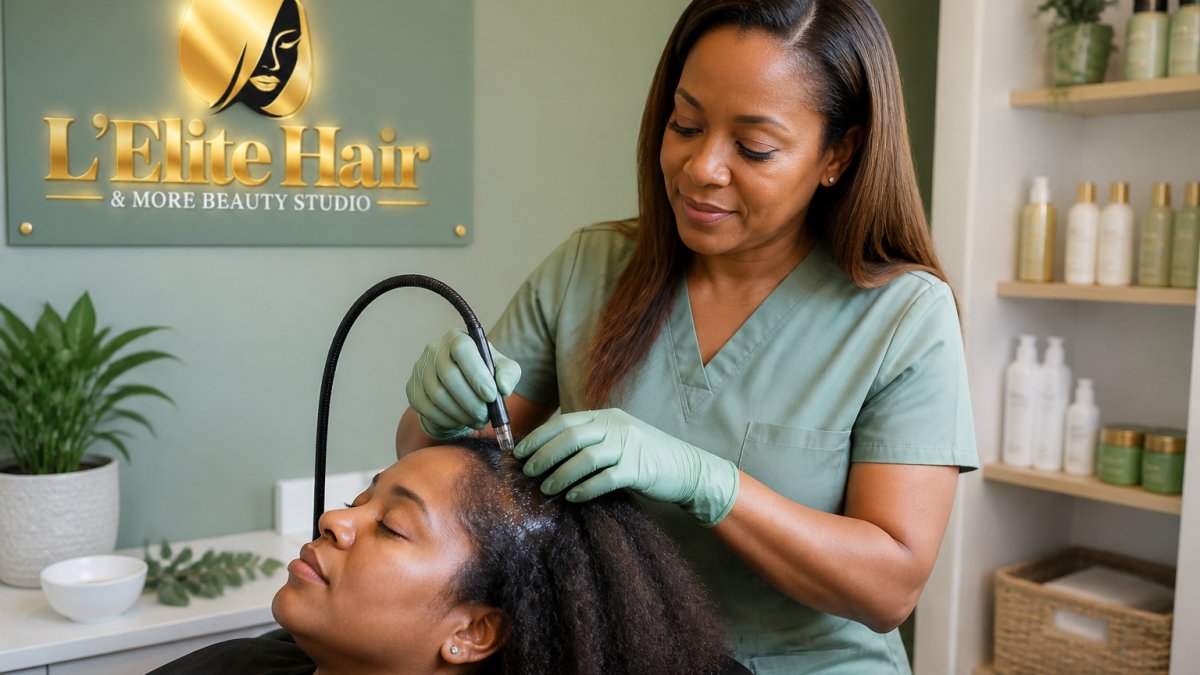
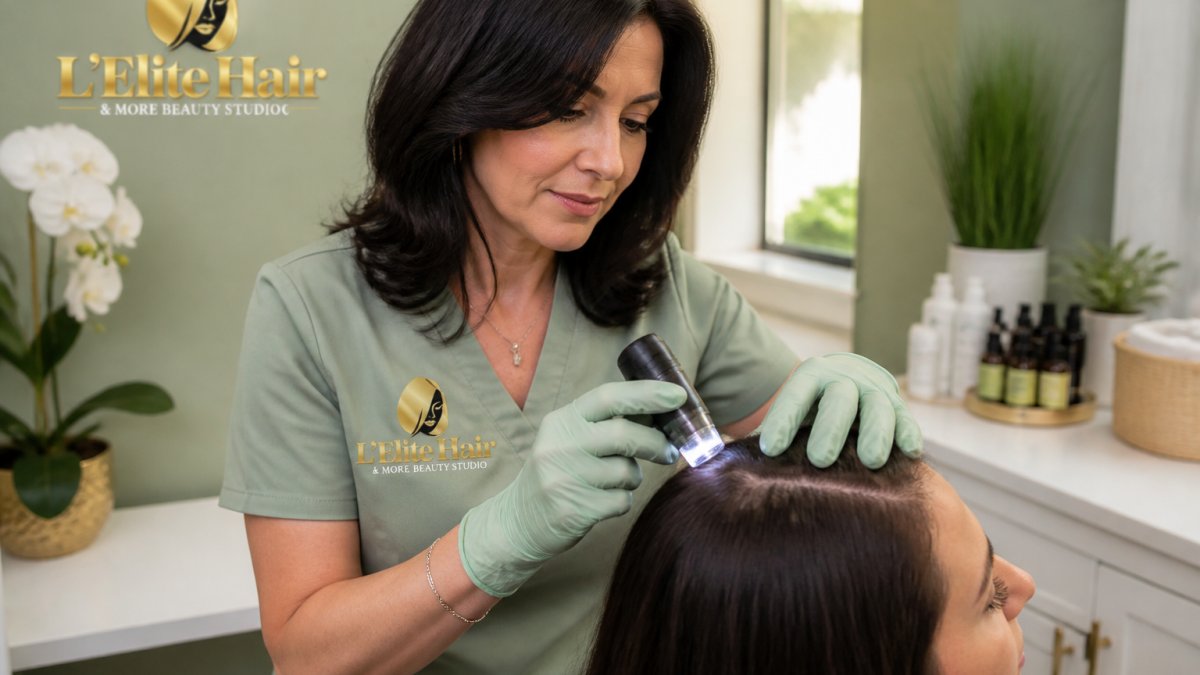
At our studio, a microscopy scalp analysis is one of the tools we use. A small camera magnifies the scalp so we can look at buildup, flaking, oil levels, and follicle activity up close. Linda E., our founder and a certified trichologist, walks clients through what appears on the screen in plain language.
That session usually includes:
- A magnified look at several areas of the scalp
- A review of your hair-care routine and history
- A scalp wellness consultation with personalized recommendations
- A referral to a dermatologist when something falls outside our scope
We do not diagnose medical conditions. We look, educate, and guide. When a concern needs medical care, we say so.
When to See a Dermatologist for Scalp Problems
Some scalp issues belong in a medical office, not a salon chair. Knowing the line matters.
Book a dermatologist if you notice:
- Sores, scabs, or open areas that will not heal
- Sudden, heavy shedding that does not slow down
- Patches of smooth, bare skin
- Severe pain, swelling, or pus
- A scalp reaction after a new product or chemical service
- Symptoms that keep getting worse despite gentle care
The American Academy of Dermatology's guidance on when to see a dermatologist for hair loss recommends seeking care when hair loss is sudden, patchy, or accompanied by scalp symptoms. That is sound advice. A dermatologist can rule out medical causes that no cosmetic service can address.
Our role comes after or alongside that care. We support scalp wellness and help maintain a healthy scalp environment while you follow your medical provider's plan.
Common Mistakes People Make When Checking Scalp Health
Most home scalp checks fail for the same few reasons. Fix these and your results get far more useful.
The biggest mistake is checking right after washing. Water and shampoo hide flakes, tone down redness, and change how oil sits on the skin. Wait a day.
Other common errors:
- Using dim bathroom light instead of direct light
- Checking only the front of the scalp and ignoring the crown and back
- Panicking over normal daily shedding
- Assuming a flaky scalp always means dryness when it often means something else
- Self-treating for weeks instead of getting a professional opinion
If you are unsure what you are seeing, a professional scalp analysis removes the guesswork. You can review the National Institute of Arthritis and Musculoskeletal and Skin Diseases' overview of hair and scalp conditions for background, but an in-person look beats any photo.
Conclusion: Your Next Step Toward a Healthier Scalp
A scalp that itches, flakes, or sheds more than usual is telling you something. The good news is that most early concerns respond well to consistent, professional scalp care.
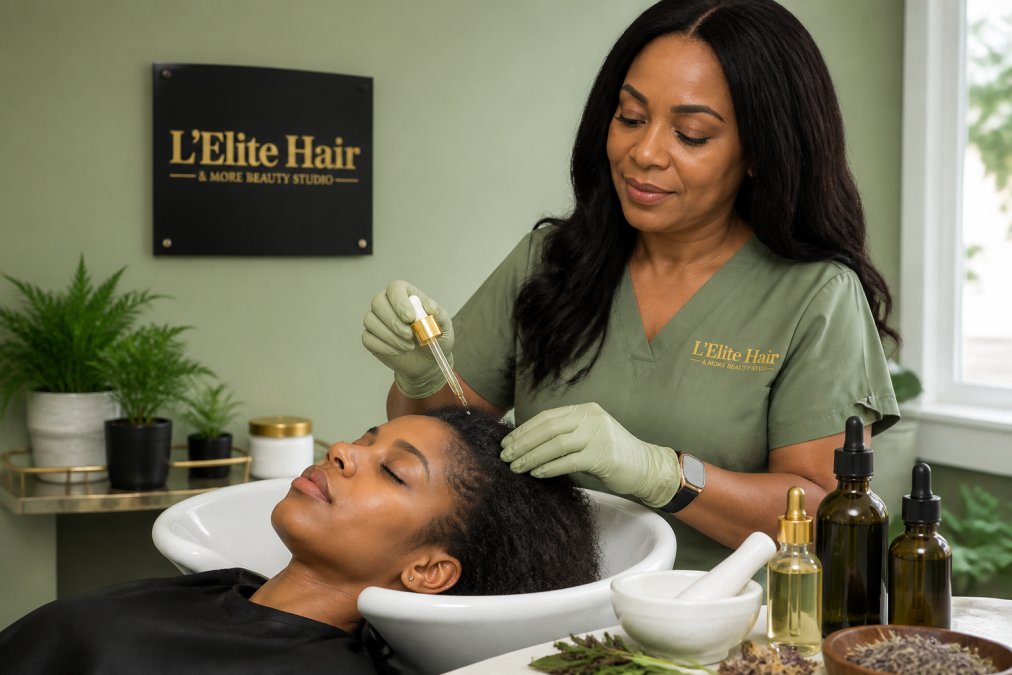
At L'Elite Hair & More Beauty Studio, we offer microscopy scalp analysis, scalp wellness consultations, deep scalp detox, and customized herbal scalp treatments. Linda E. brings decades of experience as a licensed cosmetologist and certified trichologist, plus a compassionate approach shaped by her background as a medical social worker. Every plan is personalized to your scalp, not a template.
Book an appointment through Vagaro and let us help you understand what your scalp is telling you.
Frequently Asked Questions
How can I check my scalp health at home?
Start with clean, dry hair and good lighting. Part your hair in several sections using a comb, then look for redness, flakes, crusting, or thinning patches. Press gently along the scalp to check for tenderness, and notice whether you feel bumps or sore spots. Pay attention to itching, burning, or a tight feeling. A scalp health check at home takes about five minutes and works best when repeated monthly so you can track changes over time.
What are the most common signs of an unhealthy scalp?
Persistent itching, flaking that looks like dandruff, redness, scaly or crusty patches, unusual tenderness, and excessive shedding are the main warning signs. Some people also notice a foul odor, small bumps, or a burning sensation. Occasional flakes after a few days without washing can be normal, but symptoms that last more than two weeks or come with pain, open sores, or sudden hair loss deserve a professional evaluation.
Can a scalp camera show scalp problems?
A scalp camera, also called a trichoscope, magnifies the scalp and hair follicles so a trained professional can see buildup, inflammation, flaking, follicle density, and hair diameter up close. It helps document what is happening and track changes between visits. A camera does not diagnose medical conditions on its own, but it gives a trichologist or stylist useful information to guide personalized scalp and hair recommendations and to decide whether a medical referral makes sense.
When should I see a dermatologist about my scalp?
Book a dermatologist if you notice sudden or patchy hair loss, open sores, bleeding, severe pain, or a rash that spreads. The same applies to persistent scaling that does not improve with regular washing, or any scalp change that appears after starting a new medication. A board-certified dermatologist can evaluate conditions that fall outside cosmetic scalp care. For everyday concerns like buildup, dryness, or mild flaking, a professional scalp analysis at a trichology-focused studio can be a helpful first step.