
 how-to
Why Herbal Scalp Treatments Work Better
Table of Contents
- How Herbal Scalp Treatments Support Hair Health
- The Science Behind Botanical Extracts and Hair Follicles
- Common Herbs That Support Scalp Wellness and Hair Growth
- Understanding Signs of Scalp Inflammation
- Natural Scalp Detox Methods and Deep Cleansing
- The Role of Trichology Scalp Analysis in Personalized Care
- Scalp Wellness Benefits of Professional Herbal Treatment
- Herbal Treatments vs. Conventional Hair-Loss Solutions
- Frequently Asked Questions
Last Updated: September 21, 2026
How Herbal Scalp Treatments Support Hair Health
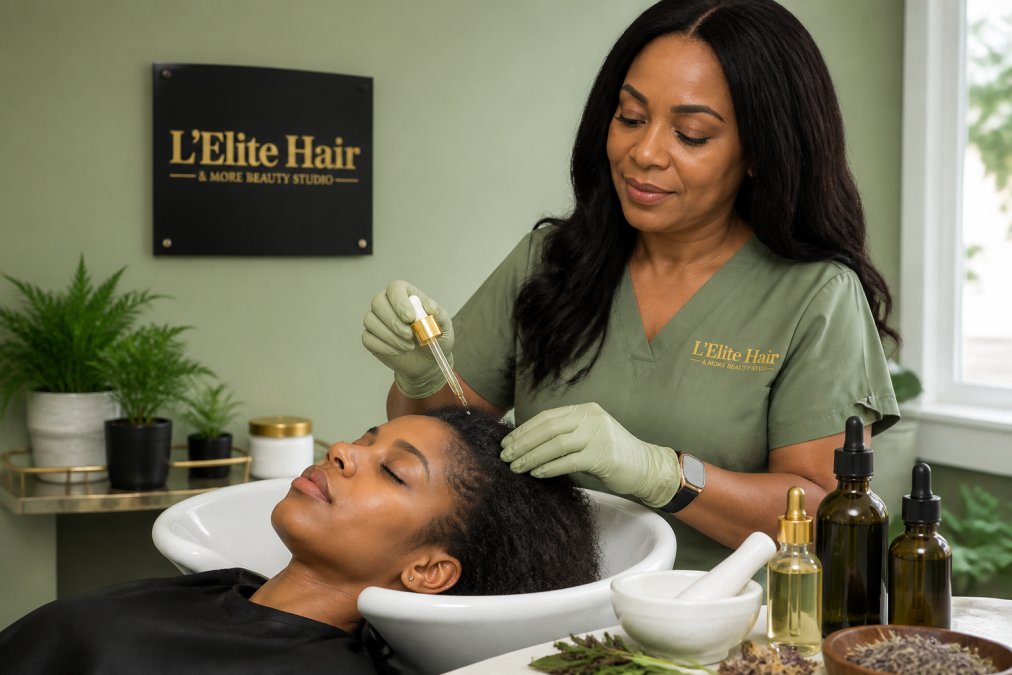
Herbal scalp treatments work by addressing the root cause of hair problems: scalp health. When your scalp is healthy, your hair has the best environment to grow strong and thick. At L'Elite Hair & More Beauty Studio, customized herbal scalp treatments are used to support scalp wellness and promote healthy-looking hair.
Your scalp is living tissue. It needs proper care, just like the skin on your face. Many people focus only on their hair strands and ignore the scalp underneath. This is a mistake. A healthy scalp environment supports the hair follicles that produce new growth.
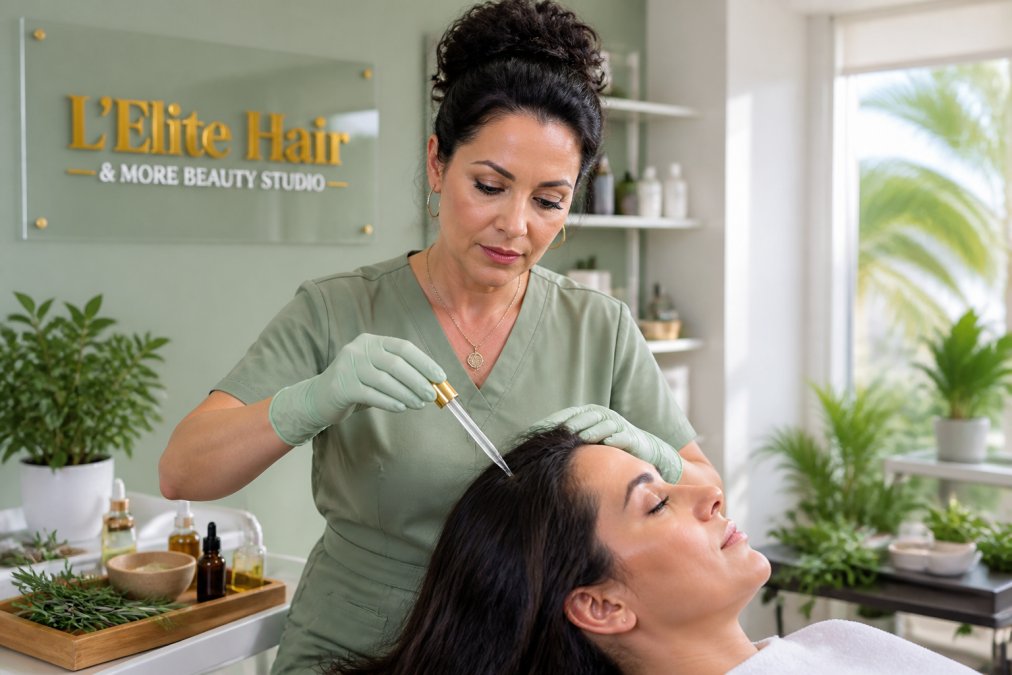
Herbal scalp treatments deliver botanical extracts directly to the scalp. These extracts contain natural compounds that help reduce inflammation and support circulation. Better circulation means more nutrients reach your hair follicles. More nutrients can support stronger, healthier hair.
The benefits include:
- Reduced scalp buildup and congestion
- Improved blood flow to hair follicles
- Calmed inflammation and irritation
- Support for a balanced scalp microbiome
- Healthier-looking hair from root to tip
The Science Behind Botanical Extracts and Hair Follicles
Understanding how plants support hair health starts with understanding the hair growth cycle. Your hair goes through phases: growth, transition, and rest. During the growth phase, your hair follicle is most active. Herbal extracts help support this phase by nourishing the follicle and the scalp around it.
How bioactive compounds address scalp circulation
Botanical extracts contain bioactive compounds. These are natural chemicals that have specific effects on your body. Some herbs improve blood flow. Better circulation means more oxygen and nutrients reach your hair follicles.
Rosemary is a common example. This herb has been used for centuries to support scalp health. Modern use shows that rosemary may help improve circulation to the scalp (pubmed.ncbi.nlm.nih.gov). When blood flow improves, the dermal papilla at the base of your hair follicle receives more nourishment.
The dermal papilla is crucial. It's the part of your follicle that controls hair growth. When it's well-nourished, it can support stronger, healthier hair growth.
Other circulation-supporting herbs include:
- Peppermint (cooling, stimulating effect on scalp)
- Ginger (warming, promotes blood flow)
- Cayenne (increases local circulation)
Anti-inflammatory properties and scalp health
Inflammation is a hidden problem for many people with hair loss. A inflamed scalp creates a hostile environment for hair growth. Herbal scalp treatments help by reducing inflammation naturally.
Many herbs have anti-inflammatory properties. Chamomile calms irritated skin. Lavender soothes redness and discomfort. Calendula supports healing of damaged scalp tissue.
When inflammation decreases, your scalp can heal. A healed scalp supports better hair growth. Addressing scalp inflammation can contribute to improved hair health.
Common Herbs That Support Scalp Wellness and Hair Growth
Different herbs work in different ways. Some improve circulation. Others reduce inflammation. Some support the scalp microbiome. The best herbal scalp treatments combine multiple herbs for synergistic effect.
Rosemary is one of the most studied herbs for scalp wellness. It stimulates circulation and has antioxidant properties. Many people use rosemary infusions as a rinse after shampooing.
Peppermint creates a cooling sensation and may improve blood flow to the scalp. It also has antimicrobial properties, which helps maintain a healthy scalp microbiome.
Lavender is calming and soothing. It's especially helpful if your scalp is irritated, inflamed, or sensitive. Lavender also has antimicrobial benefits.
Chamomile reduces inflammation and supports healing. It's gentle enough for sensitive scalps and works well for people with scalp irritation.
Sage has been traditionally used to support scalp health and may help with excessive oil production.
Understanding Signs of Scalp Inflammation
Scalp inflammation shows up in different ways. Recognizing these signs helps you understand why your hair may be thinning or shedding.
Common signs include:
- Redness or visible irritation
- Itching or burning sensation
- Flaking or visible dandruff
- Excessive oil or greasiness
- Tenderness when touching the scalp
- Unusual shedding or hair loss
- Scaly patches or bumps
Natural Scalp Detox Methods and Deep Cleansing
Your scalp accumulates buildup over time. Product residue, environmental pollution, dead skin cells, and excess sebum create a layer that blocks nutrients from reaching your hair follicles. A scalp detox removes this buildup.
- Gentle exfoliation - Removing dead skin cells and loose buildup
- Deep cleansing - Using herbal infusions to dissolve product residue
- Nourishing - Applying herbal extracts that support scalp health
- Balancing - Helping your scalp return to its natural pH balance
After a detox, many people may notice:
- Less itching and irritation
- Fresher-feeling scalp
- Better hair texture
- Improved shine and volume
- Reduced shedding
The Role of Trichology Scalp Analysis in Personalized Care
Trichology is the science of hair and scalp health. A trichologist is trained to analyze scalp conditions and recommend personalized solutions. This is where generic treatments fall short. Your scalp is unique. Your herbal scalp treatments should be too.
Microscopy scalp analysis shows exactly what's happening on your scalp. You can see:
- Buildup and congestion
- Inflammation levels
- Scalp microbiome health
- Oil production patterns
- Hair follicle condition
Scalp Wellness Benefits of Professional Herbal Treatment
Professional herbal scalp treatments offer benefits you can't get from at-home products alone. A trained professional knows how to prepare herbal infusions correctly. They understand extraction methods and dosing. They can combine herbs for maximum benefit.
Many clients report:
- Noticeably healthier scalp
- Improved hair texture and shine
- Reduced shedding
- Better scalp comfort
- Increased confidence about their hair
Herbal Treatments vs. Conventional Hair-Loss Solutions
-
Minoxidil (Rogaine) extends the growth phase of the hair cycle and may increase blood flow to follicles. It's topical and available over-the-counter.
-
Finasteride (Propecia) addresses hormonal factors in androgenetic alopecia by reducing DHT sensitivity. It's oral and requires a prescription.
-
They reduce inflammation, which can inhibit hair growth
-
They improve circulation, delivering oxygen and nutrients to follicles
-
They help maintain scalp microbiome balance
-
They remove buildup that blocks nutrient absorption
-
They soothe irritation and create a calmer scalp environment
If you're using minoxidil on an inflamed, congested scalp with poor circulation, the medication may have to work against baseline dysfunction. Your scalp barrier may be compromised, absorption could be uneven, and inflammation may actually counteract the treatment's benefits.
A practical long-term approach combines:
- Medical intervention (minoxidil, finasteride, or other prescribed treatment) to address the primary mechanism of hair loss
- Professional scalp wellness support (quarterly or bi-annual scalp detox, microscopy scalp analysis, and customized herbal treatments) to maintain scalp health
- At-home herbal maintenance (weekly herbal rinses, scalp oils, or gentle herbal masks) to sustain the scalp environment between professional visits
- Lifestyle support (stress management, adequate sleep, nutrition) to support both the medication and the scalp
When to use each approach:
- Medical intervention alone may be appropriate if your hair loss is primarily hormonal and your scalp is otherwise healthy
- Herbal support alone may be sufficient if your hair loss is related to scalp inflammation, buildup, or poor circulation, not hormonal alopecia
- Combined approach is ideal for most people, especially those with medical hair loss who want to optimize their scalp environment and improve long-term outcomes
Frequently Asked Questions
How do herbal scalp treatments actually support hair growth better than over-the-counter products?
Herbal scalp treatments work through multiple pathways. Botanical extracts contain bioactive compounds that support scalp circulation, reduce oxidative stress, and help maintain a balanced scalp microbiome. Unlike many commercial products that focus on a single mechanism, herbal treatments often address multiple factors simultaneously, inflammation, sebum regulation, and follicular health. A professional trichology scalp analysis can identify which herbs and delivery methods will work best for your specific scalp condition, making the treatment more effective than generic solutions.
What are the signs of scalp inflammation I should watch for?
Signs of scalp inflammation include persistent itching, redness, tenderness, flaking or visible buildup, unusual shedding, and a tight or uncomfortable sensation. Some people experience scalp inflammation after chemical treatments, due to stress, or from product sensitivity. If you notice sudden changes in your scalp or hair loss accompanies these symptoms, consult a dermatologist or trichologist. Professional scalp analysis can determine whether inflammation is the root cause and recommend appropriate herbal or clinical treatments to address it.
Are herbal scalp treatments safe for sensitive scalps or after medical treatments like chemotherapy?
Herbal treatments can be gentle and supportive for sensitive scalps when properly selected and applied by a professional. However, sensitivity varies greatly depending on your scalp condition, any medications you're taking, and your medical history. If you're recovering from chemotherapy or dealing with scalp sensitivity, it's essential to work with a qualified professional who can perform a scalp analysis, test for reactions, and customize treatments. A patch test on a small area before full application helps ensure compatibility. Always disclose your medical history so your practitioner can recommend the safest approach.
How do natural scalp detox methods differ from regular shampooing?
Natural scalp detox methods go deeper than shampooing. While regular shampoo cleanses the hair shaft and surface, detox treatments use herbal infusions, steam, and massage to remove buildup from hair follicles, support the scalp microbiome, and improve circulation to the dermal papilla. Professional deep scalp detox often includes exfoliation, botanical infusions, and specialized massage techniques that stimulate the scalp and support healthy hair growth cycles. At-home methods can include herbal rinses and scalp masks, but professional treatments provide more thorough results because they combine multiple techniques and high-quality botanical extracts.
If you're ready to understand your scalp and discover personalized herbal scalp treatments that actually address your specific concerns, L'Elite Hair & More Beauty Studio offers microscopy scalp analysis and customized herbal treatment plans. Schedule a scalp wellness consultation to see what's really happening on your scalp and learn which herbal approaches will work best for your hair goals. Call L'Elite Hair & More Beauty Studio or visit to book your appointment today.