 how-to
What to Expect During a Microscopy Scalp Analysis
Table of Contents
- Understanding Microscopy Scalp Analysis
- Before Your Appointment: How to Prepare
- What Does Your Scalp Look Like Under a Microscope
- The Scalp Analysis Consultation: Step by Step
- How Long Does a Scalp Analysis Take
- What Your Scalp Analysis Results Reveal
- What Happens After Your Scalp Analysis
- Frequently Asked Questions
Last Updated: October 11, 2026
Understanding Microscopy Scalp Analysis
A microscopy scalp analysis is a professional examination of your scalp and hair using magnification technology to assess scalp health, hair condition, and potential concerns. At L'Elite Hair & More Beauty Studio, we use this specialized service to give you a clear picture of what's happening at the root level, literally.
Unlike a quick glance in the mirror, a microscopy scalp analysis reveals details invisible to the naked eye, hair shaft texture, follicle health, scalp condition, and signs of buildup, dryness, or shedding patterns. It's about understanding your scalp and hair so you can make informed decisions about your care.
A trichologist or trained scalp specialist uses specialized equipment to examine your scalp closely, combining visual examination with magnified viewing. The goal is education and personalized recommendations, not medical treatment.
Before Your Appointment: How to Prepare
Your preparation matters. Simple steps before arriving help you get the clearest view of your actual scalp condition.
Wash your hair 24 hours before your appointment. Your scalp needs time to return to its natural state. Washing too close obscures your typical condition; waiting too long allows buildup and oils to accumulate.
Don't apply heavy products the morning of your visit. Skip serums, oils, leave-in conditioners, and styling products, they obscure your true scalp condition and hair texture.
Wear your hair down or in a loose style. Tight styles leave marks and create tension; loose hair allows full scalp examination.
Come with dry or damp hair. Wet hair is harder to examine closely. If you've just showered, allow your hair to air-dry or blow-dry before your appointment.
Bring a list of products you use regularly. Include shampoos, conditioners, styling products, and any treatments. The specialist will ask about your routine, and having this information ready helps the consultation move smoothly.
What Does Your Scalp Look Like Under a Microscope
The Microscopic Examination Is Noninvasive
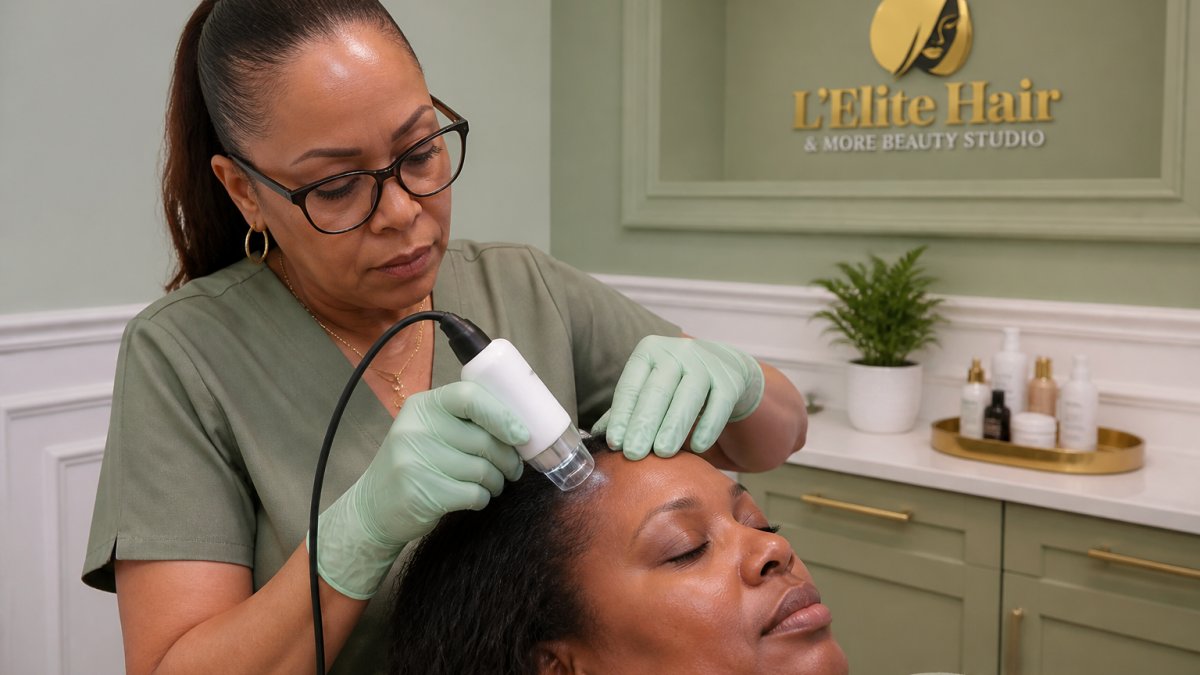
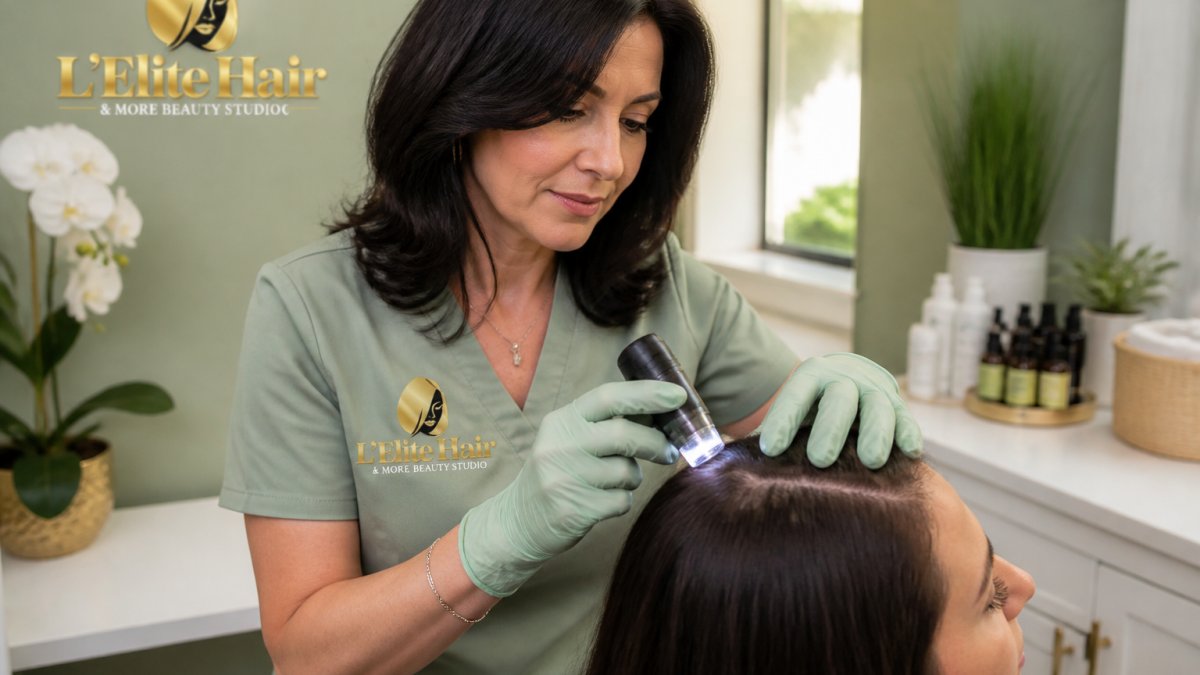
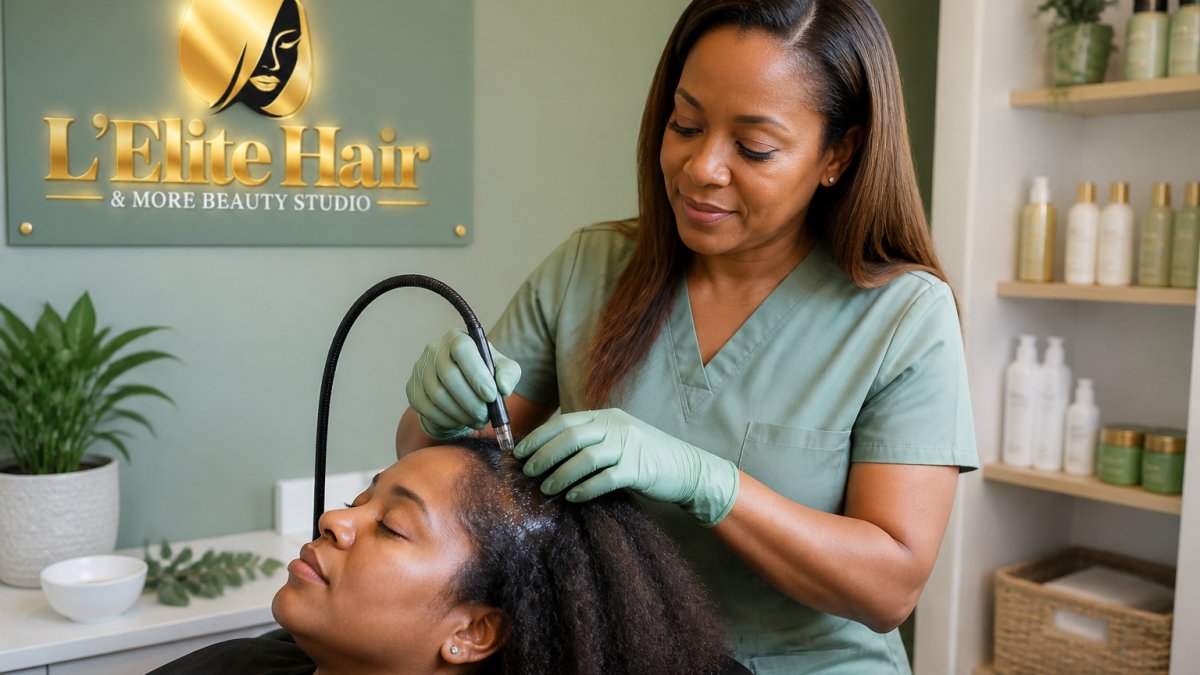
The handheld digital microscope or scalp camera does not cut, pluck, or alter your hair or scalp. The specialist holds the device gently against your scalp to magnify the area. You remain seated comfortably while the examination takes 10 to 15 minutes in a private room with bright, even lighting. Many clients find the process relaxing.
Hair Sampling: What to Expect
The specialist may gently pluck a few hairs to examine root structure and hair shaft under higher magnification. This sampling reveals whether hairs are shedding naturally (with full root) or breaking partway down the shaft, and shows root health and signs of stress or damage. No hair is cut; the examination is purely observational.
What You'll See on the Screen
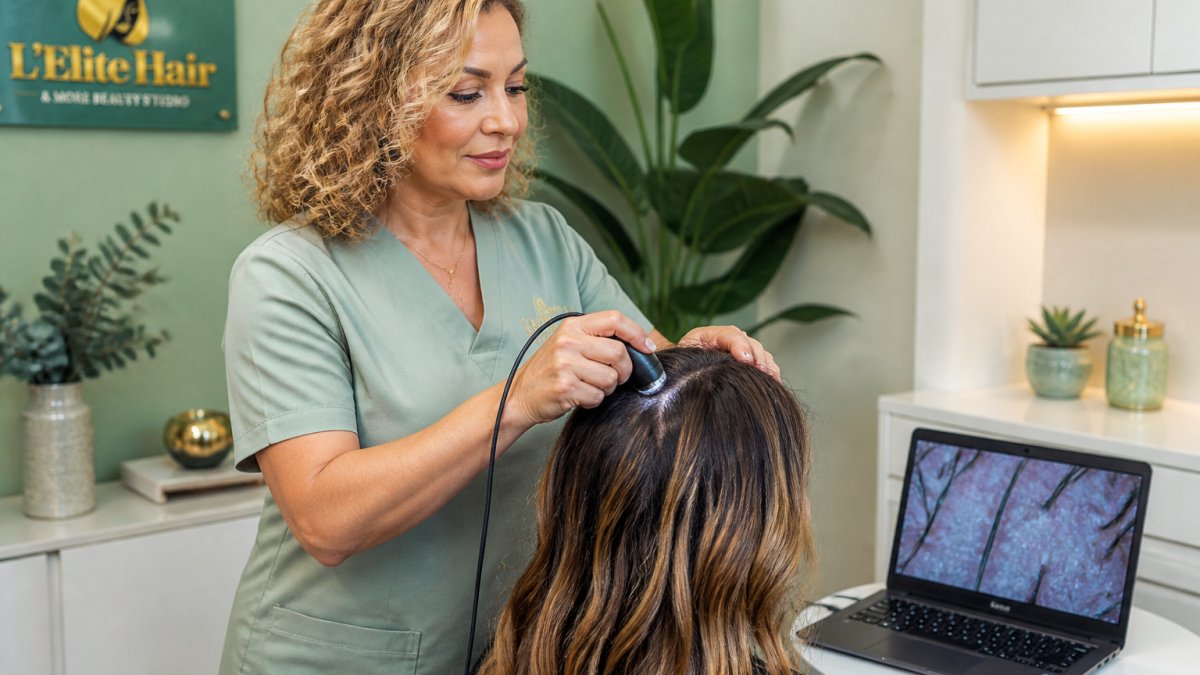
Most modern scalp analysis equipment displays magnified images on a screen you can watch in real time. The specialist narrates what you're seeing:
- Hair shaft appearance: Individual strands magnified 40x to 200x, revealing texture and damage. Healthy hair has consistent width and smooth cuticle; damaged hair shows lifting, thinning, or rough patches.
- Follicular openings: Small pores where hair grows. You'll see whether follicles are clear or clogged with buildup, dead skin cells, or product residue.
- Scalp condition: Color, texture, and health of your scalp skin. Healthy scalp is light pink or tan, smooth, and free of excessive flaking. You may observe oil, flakes, redness, dryness, or product residue.
- Hair density and distribution: How many hairs grow in each area and whether growth is even. Thinning areas show fewer hairs or wider spacing between follicles.
- Hair root appearance: The base of the hair shaft and follicle structure. Healthy roots are firmly anchored; weak or damaged roots appear loose, thin, or show breakage.
- Shedding patterns: Whether hairs shed with intact roots (natural) or break partway down the shaft (breakage). This distinction shows whether your concern is normal hair cycling or stress-related damage.
The Scalp Analysis Consultation: Step by Step
Initial Consultation and History
Your appointment begins with conversation. The specialist will ask about your hair and scalp history. You'll discuss:
- How long you've had current concerns (shedding, thinning, dryness)
- Your daily hair routine and products
- Any recent changes to your hair or scalp
- Your medical history and any medications
- Stress levels and lifestyle factors
- Family history of hair loss or scalp conditions
This conversation matters. Hair and scalp health connect to overall wellness. Stress, diet, sleep, and health conditions all affect your hair. Understanding your full picture helps the specialist give you accurate recommendations.
Visual Examination of Your Scalp
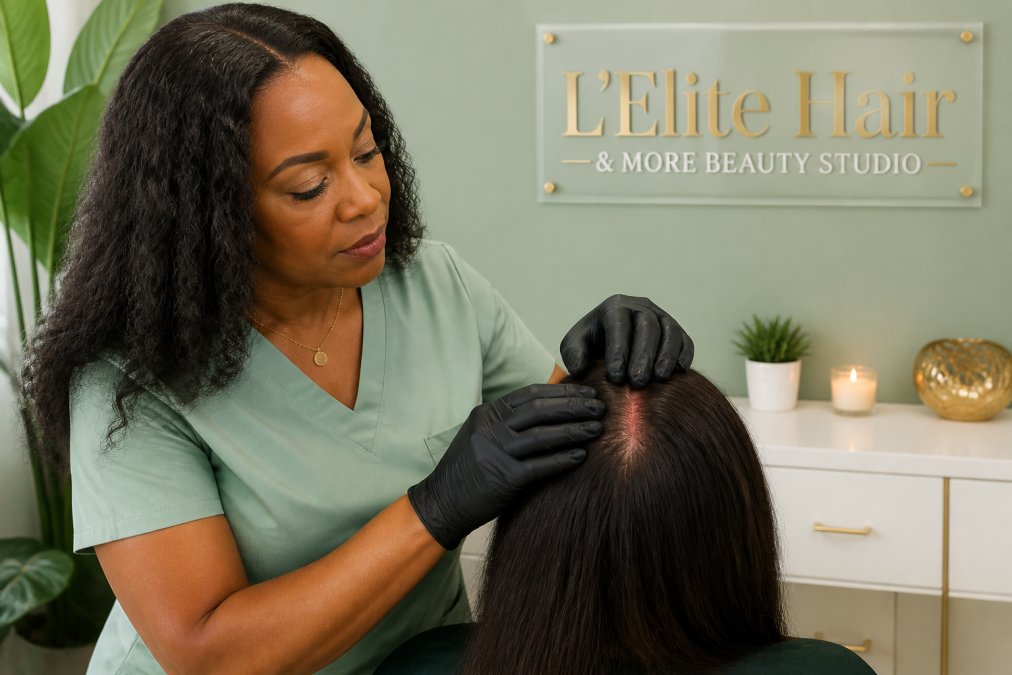
Before magnification, the specialist performs a visual examination. They'll look at your scalp with the naked eye and good lighting. This shows:
- Overall scalp color and texture
- Visible flaking or buildup
- Areas of redness or irritation
- General hair density
- Signs of breakage or damage
This step takes just a few minutes but provides important baseline information.
Microscopic Examination and Hair Shaft Assessment
Now comes the magnified view. The specialist uses a handheld microscope or scalp camera to examine your scalp closely. They'll focus on different areas, front, sides, crown, and back, to give you a complete picture.
You'll see the magnified image on a screen. The specialist points out what you're looking at. You might see:
- Individual hair shafts and their texture
- Follicle openings and scalp condition
- Any buildup, oil, or debris
- Signs of damage or breakage
- Hair growth patterns
The specialist may gently pluck a few hairs to examine the root and hair shaft more closely. Examining plucked hairs shows the root structure and whether the hair is being shed naturally or breaking.
How Long Does a Scalp Analysis Take
A typical scalp analysis appointment runs 30 to 45 minutes. The time breaks down roughly like this: (Source: research on hair follicle structure and growth cycles)
| Phase | Duration |
|---|---|
| Initial consultation and history | 10-15 minutes |
| Visual scalp examination | 5 minutes |
| Microscopic examination | 10-15 minutes |
| Results review and recommendations | 10-15 minutes |
The exact time depends on how detailed your consultation is and how many concerns you're addressing. If you have multiple scalp or hair issues, the appointment may run longer as the specialist takes time to examine different areas thoroughly.
Arrive 5 to 10 minutes early to complete any paperwork. This keeps your appointment on schedule.
What Your Scalp Analysis Results Reveal
Your microscopy scalp analysis results show you exactly what's happening with your scalp and hair at the surface and root level.
What a Microscopy Scalp Analysis Can Show
Scalp wellness assessment reveals whether your scalp environment supports healthy hair growth: oil production level (balanced, oily, or dry), buildup or debris clogging follicles, signs of irritation or sensitivity, scalp texture, and hard water deposits or product residue.
Shedding and hair loss patterns are visible under magnification. The analysis distinguishes between normal shedding (hairs with intact roots, 100-150 per day), breakage (hairs breaking partway down the shaft), and thinning (fewer hairs, wider spacing, or miniaturized hairs).
Buildup and debris are identified clearly. Product buildup, hard water deposits, mineral accumulation, or scalp debris clog follicles and prevent healthy growth.
What a Microscopy Scalp Analysis Cannot Diagnose
It's equally important to understand the limits of a scalp analysis. A microscopy examination is a visual, cosmetic assessment. It does not diagnose medical conditions, and certain concerns require clinical evaluation by a dermatologist or licensed healthcare provider.
A scalp analysis cannot diagnose:
- Medical scalp conditions such as psoriasis, seborrheic dermatitis, fungal infections, or bacterial infections (require clinical examination, cultures, or biopsies)
- Alopecia or medical hair loss such as androgenetic alopecia, telogen effluvium, or alopecia areata (require dermatologic evaluation, blood work, or scalp biopsy)
- Nutritional deficiencies or systemic health issues affecting hair (require medical testing)
- Genetic or hereditary hair loss patterns (require clinical assessment)
- Hormonal imbalances or endocrine conditions (require blood work and medical evaluation)
When to Seek Dermatology Consultation
Your scalp analysis results may indicate that you should consult a dermatologist or licensed healthcare provider.
How Findings Guide Your Next Steps
What Happens After Your Scalp Analysis
After your analysis, you'll have a clear picture of your scalp health and a personalized plan forward.
You receive a summary of findings. Many specialists provide written notes or photos from your analysis. This gives you a record you can reference and share with other healthcare providers if needed.
Personalized recommendations guide your next steps. These might include:
- Specific scalp wellness treatments like deep scalp detox or Japanese Head Spa
- Home-care products suited to your scalp type
- Lifestyle adjustments (stress management, diet, sleep)
- When to follow up or seek additional professional evaluation
You decide what makes sense for you. A scalp analysis is educational. You're not obligated to pursue any treatment. But armed with clear information about your scalp, you can make choices that actually address your concerns rather than guessing.
Follow-up appointments help track progress. If you pursue scalp wellness treatments or make changes to your routine, a follow-up analysis in 6 to 8 weeks shows whether your scalp is improving.
Understanding what to expect during a microscopy scalp analysis removes the mystery and helps you prepare mentally and practically. You'll see your scalp's actual condition, learn what it means, and receive personalized guidance.
Ready to see what your scalp reveals? Schedule your scalp wellness consultation with L'Elite Hair & More Beauty Studio. Call 239-319-0942 or book your appointment through Vagaro to begin your personalized hair and scalp wellness journey.
Frequently Asked Questions
Should I wash my hair before a microscopy scalp analysis?
It depends on what you and your trichologist want to assess. If you're concerned about scalp buildup, oil, or debris, coming in with unwashed hair shows your scalp's natural state. If you're focusing on hair shaft condition or want to be comfortable during the appointment, washing beforehand is fine. Discuss your specific concerns when you book your scalp analysis consultation so the professional can advise you on the best preparation for your needs.
What can a microscopy scalp analysis show about hair loss and shedding?
A microscopy scalp analysis examines hair density, hair follicle appearance, hair shaft condition, and signs of breakage or damage. It can reveal whether hair is shedding due to weak hair shafts, follicle issues, or scalp health concerns. However, a scalp analysis cannot diagnose medical hair-loss conditions like alopecia. If your shedding is sudden, severe, or unexplained, consult a dermatologist alongside your scalp analysis for a complete picture of your hair health.
Can a scalp analysis diagnose scalp conditions or skin disorders?
A professional scalp analysis can identify visible scalp conditions such as buildup, inflammation, dryness, or oiliness, and assess how these affect hair health. However, it cannot diagnose medical skin disorders or dermatological conditions. If you have a scalp condition that requires medical diagnosis or treatment, your trichologist or beauty professional may recommend you consult a dermatologist for proper evaluation and care.
What should I ask my trichologist after my scalp analysis?
Ask about your hair density and follicle health, what your scalp condition means for your hair care routine, whether your hair shaft shows signs of damage, and what scalp wellness services or at-home practices could support your hair health. Ask whether your findings suggest you need to see a dermatologist. Request personalized recommendations for products, treatments, or lifestyle adjustments that match your scalp and hair needs.