 how-to
How to Soothe Sensitive Scalp During Chemotherapy: 2026 Guide
Table of Contents
- Why Chemotherapy Makes Your Scalp Sensitive
- Chemotherapy Scalp Care Tips: A Step-by-Step Daily Routine
- Managing Scalp Tenderness During Treatment
- Best Products for Sensitive Scalp During Chemo
- Nighttime Care Protocols for a Sensitive Scalp
- The Emotional Weight of Scalp Pain During Chemotherapy
- When to See a Dermatologist for Scalp Pain
- Frequently Asked Questions
Last Updated: September 17, 2026
Why Chemotherapy Makes Your Scalp Sensitive
Learning how to soothe sensitive scalp during chemotherapy starts with why it happens: the same medications that target fast-dividing cancer cells also affect rapidly dividing hair follicle cells, so tenderness, tingling, and shedding often begin within the first few weeks of treatment.
What Happens to Hair Follicles During Treatment
Chemotherapy disrupts the follicle's growth cycle and triggers inflammation. The hair shaft weakens and sheds, and surrounding skin becomes tender, itchy, or dry. This is temporary for most people and is not a skin infection or allergic reaction.
Chemotherapy Scalp Care Tips: A Step-by-Step Daily Routine
A simple daily routine does more for a sensitive scalp than any single product. Keep it short, gentle, and consistent, and think of it as supporting the scalp barrier rather than "fixing" the scalp. That thin outer layer holds in moisture and keeps irritants out; chemotherapy, steroids, and reduced oil production can weaken it, which is why a shampoo that felt fine six months ago can suddenly sting.
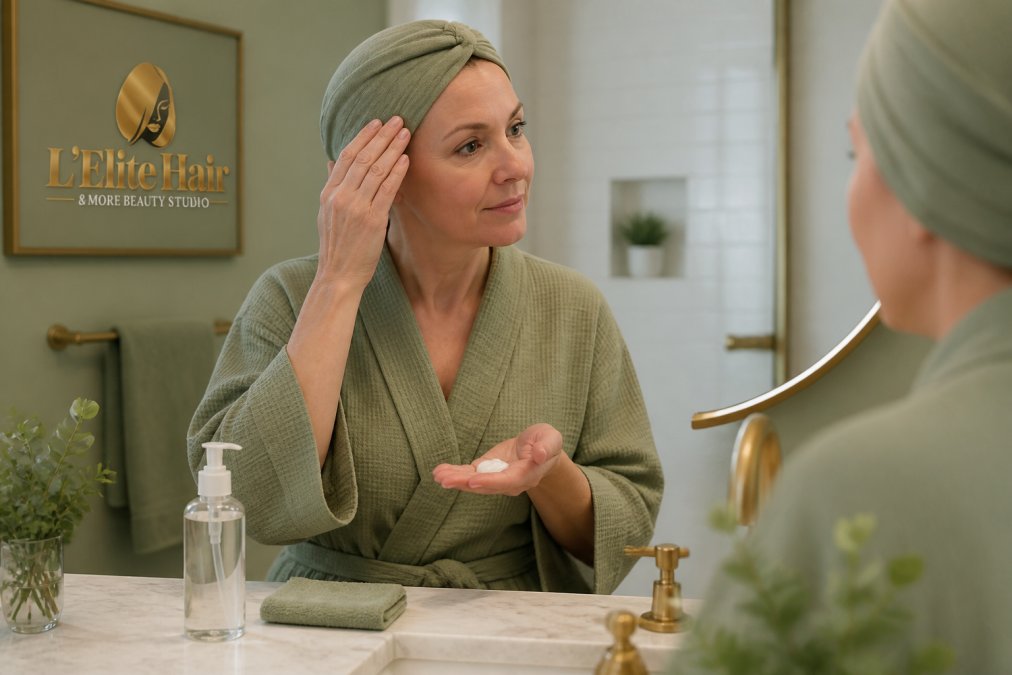
Morning: Protect Before You Go Out
- Check the scalp before you touch it. Look for new redness, flaking, or bumps. Ten seconds tells you whether today is a "normal routine" or "gentle only" day.
- Apply moisturizer to damp skin. A fragrance-free moisturizer or soothing scalp serum applied to skin still damp from a cool rinse absorbs better and creates less drag than on dry skin.
- Cover up before sun exposure. A mineral sunscreen with zinc oxide or titanium dioxide, or a soft hat with a smooth lining, protects scalp skin that is thinner and more sun-sensitive during treatment. Chemical sunscreens can sting compromised skin, so mineral formulas are usually safer.
Evening: Cleanse and Reset
- Cleanse every two to three days, or sooner if you have been sweating. Use a pH-balanced, fragrance-free shampoo and lukewarm water, never hot, hot water strips oil from an already dry barrier and worsens prickling.
- Pour shampoo into your palm first. Press it onto the scalp with flat fingertips. Never scratch with nails or pile hair on top of the head, which tangles fragile strands and pulls at the follicle.
- Pat, don't rub. Press a soft towel against the scalp and let it absorb water. Rubbing irritates tender skin and can pull loosened hair before it is ready to shed.
- Moisturize while damp. Apply a light, hypoallergenic moisturizer or soothing scalp serum within minutes of washing. Thin layers, reapplied, work better than one heavy application.
- Air-dry when you can. Skip blow dryers and heated tools. If you must dry, use the coolest setting, at least six inches from the scalp.
- Finish with a cold water rinse. A brief cool rinse after washing can calm irritation and reduce that hot, prickly feeling.
Gentle Cleansing and Washing Techniques
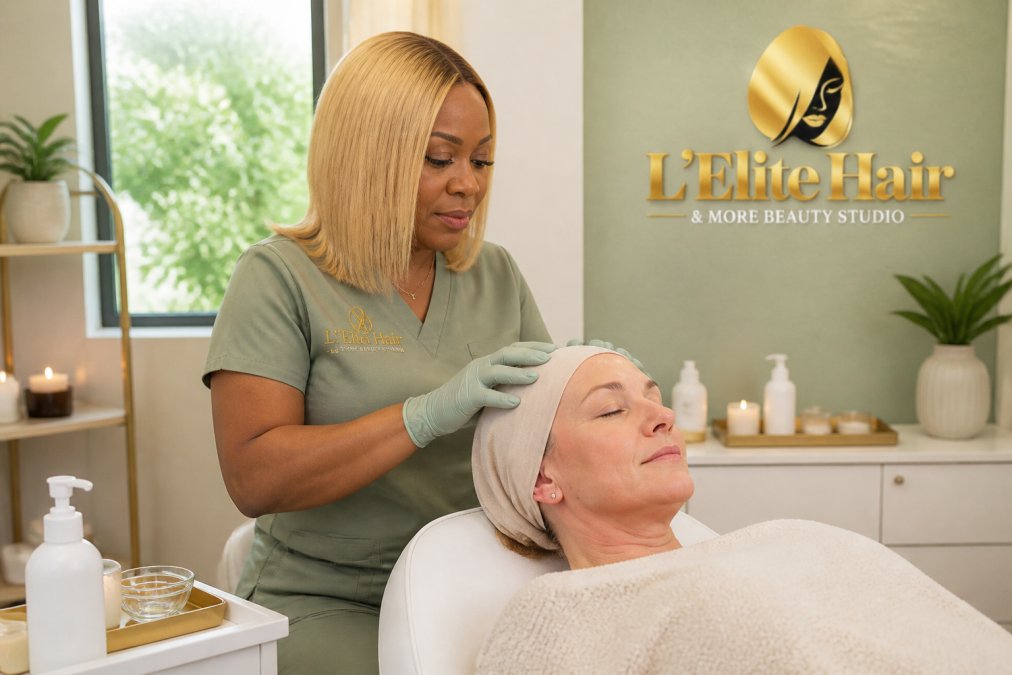
If your scalp is very tender, a squeeze bottle of diluted gentle cleanser lets you apply product without touching the scalp. Mix a little fragrance-free shampoo with lukewarm water in a clean squeeze bottle, aim the tip at the scalp, and let gravity work, the same low-contact technique used in professional scalp care for reactive skin.
Hydration and Moisturizing for Scalp Dryness
Scalp dryness during treatment responds best to simple, fragrance-free moisture. Look for glycerin, aloe, or colloidal oatmeal, applied in thin layers rather than one heavy application: glycerin pulls water into the skin, aloe calms surface irritation, and colloidal oatmeal is a well-known skin protectant.
A Note on Timing
If your treatment follows a cycle, many clients find days three through ten after an infusion most sensitive. Noting which days felt worst helps you plan lighter routines, gentler washing, and more rest. Patterns usually emerge within the first two cycles.
Managing Scalp Tenderness During Treatment
Managing scalp tenderness during treatment comes down to reducing friction and stimulation. Switch to satin or silk pillowcases, loosen tight headwear, and avoid brushing through thinning hair; a soft-bristle baby brush with almost no pressure is enough for styling.
Best Products for Sensitive Scalp During Chemo
The best products for sensitive scalp during chemo share one trait: a short, transparent ingredient list. Fragrance-free, hypoallergenic formulas beat anything marketed as "soothing" with a long ingredient panel. "Oncology-safe" is not a regulated term, so the label is yours to read, the checklist below shows how.
| Product Type | What to Look For | What to Avoid |
|---|---|---|
| Cleanser | pH-balanced, fragrance-free, sulfate-free | Sulfates, strong fragrance, menthol |
| Moisturizer | Glycerin, aloe, colloidal oatmeal | Alcohol, synthetic fragrance, dyes |
| Serum or oil | Jojoba, squalane, fractionated coconut | Undiluted essential oils, citrus oils |
| Sun protection | Physical/mineral SPF, fragrance-free | Chemical sunscreens on broken skin |
Ingredient Safety Checklist
Before any product touches your scalp, run it through this checklist:
- No fragrance or "parfum" listed
- No alcohol denat or ethanol near the top of the list
- No essential oils unless cleared by your care team
- No dyes, sulfates, or formaldehyde-releasing preservatives
- Patch-tested on your inner arm for 24 hours first
- Approved by your oncologist or dermatology team
Why Each Ingredient Matters
A checklist only helps if you understand what you are checking for.
- Fragrance and "parfum." The most common cause of contact irritation on compromised skin; one word can hide dozens of compounds. Fragrance-free is not the same as unscented, which may still contain masking fragrance.
- Alcohol denat and ethanol. These evaporate quickly, leaving skin drier and more reactive. A small amount low on the list is usually tolerable; a high position means it will likely sting.
- Sulfates. Sodium lauryl sulfate and similar surfactants create lather but strip oil from the scalp barrier. Sulfate-free cleansers clean adequately without the tight, dry feeling.
- Essential oils. Marketed as natural scalp remedies, but concentrated oils can irritate compromised skin. Peppermint, tea tree, eucalyptus, and citrus oils are common culprits. Ask your care team first and dilute heavily.
- Dyes and formaldehyde-releasing preservatives. Added for shelf life and appearance, not for your scalp. On reactive skin, they add risk without benefit.
- Sunscreen type. Mineral filters sit on top of the skin and are less likely to sting. Chemical filters absorb into the skin and can burn broken or thinning areas.
How to Read a Label in 60 Seconds
- Flip the bottle and find the ingredient list, usually in small print on the back.
- Scan the first five ingredients. These make up the bulk of the formula, so they matter most.
- Look for fragrance, parfum, alcohol denat, and any sulfate ending in "-ate." If you see them near the top, put it back.
- Check for a short list overall. Fewer than fifteen ingredients is a good sign for reactive skin.
- Patch-test on your inner arm for 24 hours before using it on your scalp.
Patch Testing, Step by Step
- Apply a small amount to the inside of your forearm.
- Leave it uncovered for 24 hours. Do not wash it off early.
- Check for redness, itching, or small bumps.
- If the area is calm, test a small spot behind your ear for another 24 hours.
- Only then use it on your scalp.
What "Gentle" Really Means
A product labeled gentle, natural, or clean is not automatically safe for a scalp in treatment. The words that matter are fragrance-free, sulfate-free, dye-free, and pH-balanced. When in doubt, bring your products to a scalp wellness consultation and we can review the labels with you. If a product causes burning, swelling, or a spreading rash, stop using it and contact your oncology team or a dermatologist.
Nighttime Care Protocols for a Sensitive Scalp
Nighttime is when most scalp irritation worsens, because friction builds over hours. A few sleep-setup changes make a real difference:
- Switch to a satin or silk pillowcase to reduce drag on thinning hair
- Sleep with a soft cotton or bamboo cap if your scalp feels cold or exposed
- Apply moisturizer 20 to 30 minutes before bed so it absorbs rather than transfers
- Keep the bedroom cool; heat worsens prickling and itching
- Skip tight braids, bands, or clips overnight
The Emotional Weight of Scalp Pain During Chemotherapy
Scalp pain during chemotherapy is not just physical. For many people it is the first visible signal that treatment is changing their body, and that carries real grief. Shedding in the shower, tenderness when you touch your head, and a shifting reflection can be harder than the discomfort itself.
When to See a Dermatologist for Scalp Pain
Contact your oncology team or a dermatologist promptly if you notice:
- Severe pain that does not respond to gentle care
- Open sores, blisters, crusting, or weeping areas
- Signs of infection such as warmth, swelling, pus, or fever
- Sudden, unexplained shedding unrelated to treatment timing
- A rash that spreads beyond the scalp
Frequently Asked Questions
Why does my scalp hurt during chemo?
Chemotherapy targets fast-dividing cells, and hair follicles are among the fastest-dividing cells in the body. When treatment disrupts the follicle, it triggers inflammation in the scalp, which shows up as tenderness, soreness, or a burning sensation. This is a common side effect of chemotherapy-induced hair loss and usually eases as shedding finishes and the scalp settles. Gentle cleansing, fragrance-free moisturizing, and avoiding harsh products help reduce irritation while the scalp rebalances.
What are the best products for a sensitive scalp during chemo?
Look for fragrance-free, hypoallergenic, pH-balanced formulas labeled for sensitive skin. Gentle, sulfate-free cleansers, soothing moisturizers with ceramides or colloidal oatmeal, and water-based topical applications are good starting points. Avoid essential oils, alcohol-heavy toners, and anything with strong fragrance or menthol during treatment. A simple ingredient safety checklist helps: no added fragrance, no dyes, no drying alcohols, and as few ingredients as possible. Ask your oncology team before trying any new product.
How can I manage scalp dryness and tenderness during cancer treatment?
Managing scalp tenderness during treatment starts with reducing friction and keeping the scalp hydrated. Use lukewarm water, pat the scalp dry with a soft towel instead of rubbing, and moisturize while the scalp is still slightly damp. A cool water rinse at the end of washing can calm irritation. Avoid tight hats, harsh brushing, and chemical treatments. A gentle scalp massage with clean fingertips, no oils unless cleared by your care team, can support circulation and provide therapeutic relief.
When should I see a dermatologist for scalp pain during chemotherapy?
Contact your oncology team or a dermatologist if you notice open sores, crusting, oozing, a rash that spreads, fever, or pain that keeps getting worse instead of easing. These signs may point to an infection or a skin reaction that needs medical care. Also reach out if over-the-counter gentle products are not helping after a week or two. A dermatologist can assess the scalp and recommend prescription options when needed. Never self-treat severe or worsening symptoms.