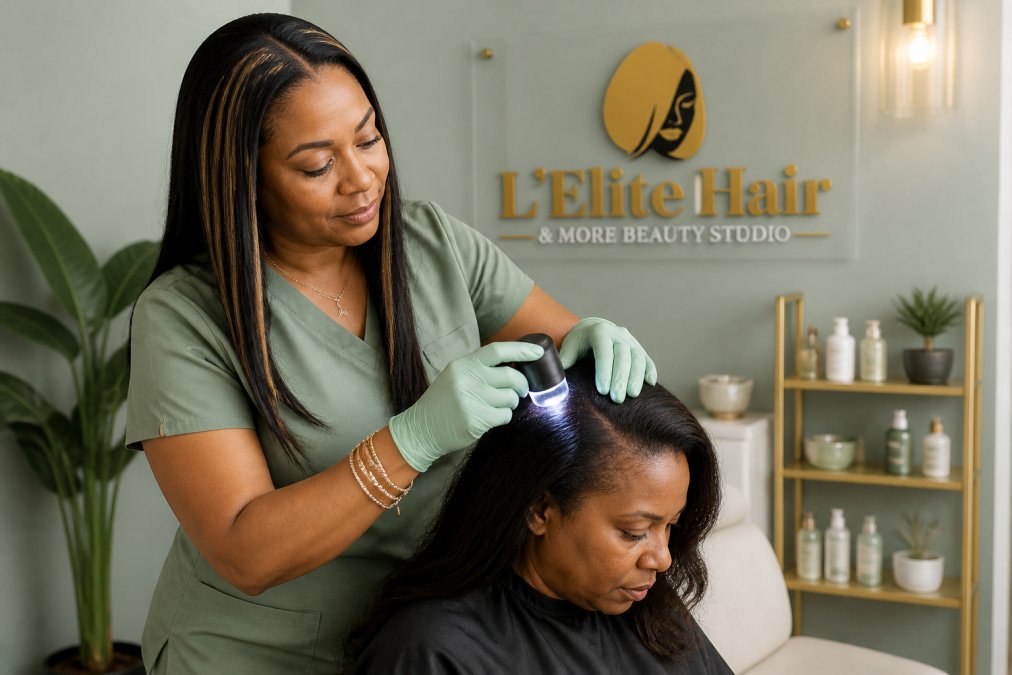
 ultimate-guide
How to Stop Hair Thinning Naturally: A 2026 Guide
Table of Contents
- Understanding Why Hair Thinning Happens
- How to Stop Hair Thinning Naturally Through Scalp Care
- What a Microscopy Scalp Analysis Reveals About Thinning Hair
- The Role of a Scalp Detox in Supporting Hair Density
- Nutrition and Supplements That Support Healthy Hair
- Japanese Head Spa and Professional Scalp Wellness Services
- When to See a Hair Loss Specialist
- Common Mistakes That Slow Hair Regrowth
- Frequently Asked Questions
Last Updated: September 14, 2026
Understanding Why Hair Thinning Happens
Hair thinning is a reduction in hair density caused by changes to the hair growth cycle, the follicle, or the scalp environment. Most people notice a wider part, a thinner ponytail, or more hair in the shower drain.
At L'Elite Hair & More Beauty Studio, clients ask constantly how to stop hair thinning naturally without harsh chemicals or guesswork. The answer starts with why it happens: the anagen (active growth) phase can be shortened by stress, nutrient gaps, hormonal shifts, or scalp inflammation, sending more hairs into the resting phase to shed together.
The most common drivers include:
- Sudden stress or illness (often called telogen effluvium)
- Genetics and hormone shifts (androgenetic alopecia)
- Nutrient shortfalls, especially iron, vitamin D, and zinc
- Scalp buildup that interferes with follicular health
- Tight styling that damages the hair shaft
Hormonal vs. Nutritional Thinning: How to Tell the Difference
Hormonal and nutritional thinning look similar but behave differently. Hormonal thinning (androgenetic alopecia, or shifts after pregnancy and menopause) follows a pattern, a widening part or thinning crown. Nutritional thinning is usually diffuse and often follows poor intake, crash dieting, or illness.
A practical way to tell them apart:
- Patterned loss (part, crown, temples) points toward hormonal causes.
- All-over shedding with no clear pattern points toward nutrition, stress, or thyroid issues.
- Scalp symptoms like itching, flaking, or tenderness suggest inflammation that needs attention.
If you cannot tell which one you are dealing with, that is exactly what a professional scalp analysis is for. The two often overlap, which is why blanket remedies rarely work.
How to Stop Hair Thinning Naturally Through Scalp Care
A healthy scalp environment is the foundation for healthy-looking hair. Each follicle sits in a pocket of skin with its own blood supply, oil glands, and microbiome; when that environment is congested, inflamed, or poorly perfused, the follicle spends more energy coping with its surroundings and less on producing a strong hair shaft.
Research on scalp health and hair growth consistently points to blood flow as a key factor in delivering nutrients to the dermal papilla, the structure at the base of each follicle. Circulation also carries away waste products and supports the scalp's natural barrier. That is why scalp care is not a cosmetic add-on; it is the base layer that everything else builds on.
The Four Pillars of a Healthy Scalp Environment
- Clean, Remove excess oil, dead skin, and product residue without stripping the scalp's natural barrier.
- Calm, Reduce inflammation, itching, and irritation so the follicle is not in a constant state of stress.
- Circulated, Encourage blood flow through massage, movement, and professional treatments.
- Protected, Shield the scalp from harsh chemicals, tight styling, UV exposure, and over-manipulation.
Most people focus only on the first pillar and wonder why results stall. The other three matter just as much.
Scalp Massage and Circulation Basics
Scalp massage is one of the simplest habits for supporting hair density. A few minutes daily helps move blood toward the follicles, reduces tension that restricts circulation, and supports lymphatic drainage.
How to do it properly:
- Use fingertips, not nails, and press in small circles.
- Work from the hairline back toward the crown, then down toward the nape.
- Spend 5 minutes daily, ideally before bed, when tension is highest.
- Pair it with a light oil if your scalp is dry, or do it dry if your scalp is oily.
- Stop if you feel pain or notice increased shedding.
A common mistake is pressing too hard: aggressive massage can irritate the scalp and worsen inflammation. Aim for firm, steady pressure that feels like a gentle knead, not a scratch.
Gentle Cleansing Without Overwashing
Washing frequency is personal, but the technique is not:
- Pre-rinse with warm (not hot) water for 30 seconds to loosen buildup.
- Apply shampoo to the scalp, not the ends, and massage with fingertips for 60 seconds.
- Rinse thoroughly, residue left behind is a common cause of itching and flaking.
- Condition mid-shaft to ends, keeping heavy conditioners off the scalp.
- Avoid harsh sulfates if your scalp is dry or reactive; gentle surfactants clean well without stripping.
Oily scalps often tolerate daily washing; dry scalps may prefer every two to three days. The right answer is whatever your scalp tolerates without rebound oil, itching, or flaking.
Essential Oils: What Works and What to Watch For
Essential oils are popular in natural hair-thinning routines, and rosemary and peppermint have shown promise in small studies for scalp circulation and comfort. But they are not risk-free.
- Always dilute. A typical safe range is a few drops of essential oil per tablespoon of carrier oil such as jojoba, argan, or fractionated coconut oil. Never apply undiluted essential oil to the scalp.
- Patch-test first. Apply a small amount behind the ear or on the inner forearm and wait 24 hours before using it on the scalp.
- Watch for photosensitivity. Citrus oils (bergamot, lemon, lime) can make skin more sensitive to sunlight and cause irritation or discoloration.
- Avoid on broken or inflamed skin. If the scalp is raw, scratched, or actively flaring, oils can worsen the situation.
- Check with a professional if you are pregnant, breastfeeding, or managing a medical condition. Some oils are not appropriate in those situations.
If you are unsure which oils suit your scalp, a professional scalp wellness consultation can build a routine for your scalp type rather than a generic one.
When Scalp Care Alone Is Not Enough
Scalp care supports a healthy environment but does not address every cause of thinning. With patterned loss, sudden patchy shedding, scalp pain, or thinning that continues despite consistent care, the next step is a professional evaluation. A microscopy scalp analysis shows what the naked eye cannot, and when findings fall outside the scope of cosmetology or trichology, a referral to a dermatologist or physician is the right move.
What a Microscopy Scalp Analysis Reveals About Thinning Hair
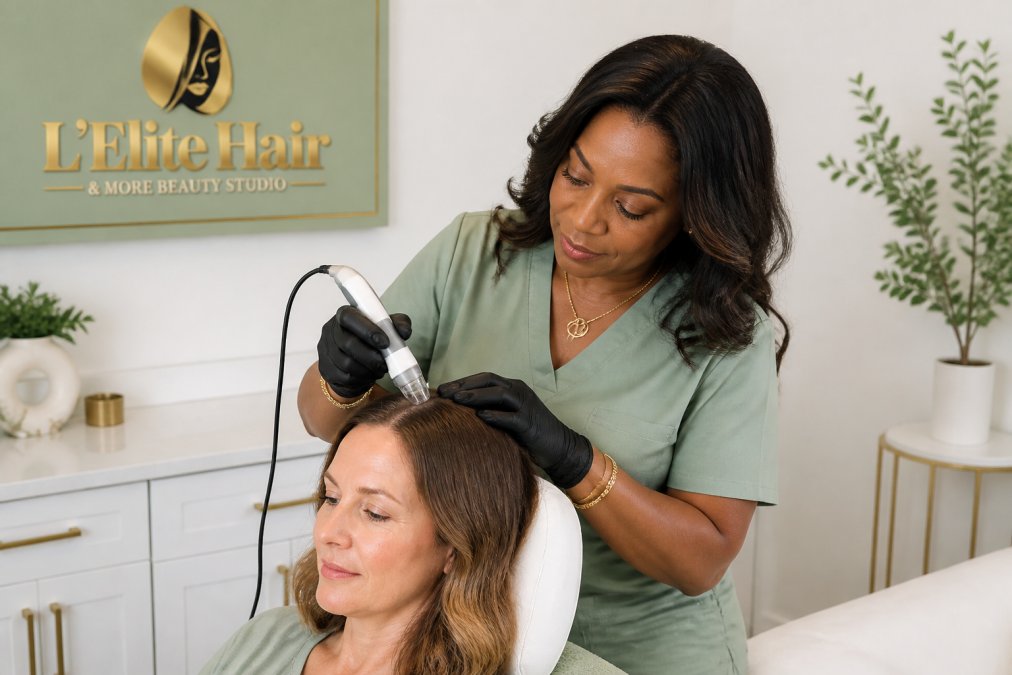
A microscopy scalp analysis is a close-up examination of the scalp and follicles using a specialized camera. It shows what the naked eye cannot: follicle density, miniaturization, oil and product buildup, redness, flaking, and the ratio of growing to resting hairs.
What most guides miss is that this single step often changes the entire plan: two people with identical-looking thinning can have completely different root causes, follicular, inflammatory, or nutritional. Without looking, you are guessing.
At L'Elite, microscopy scalp analysis is used to build a personalized scalp wellness picture before any service is recommended. It is not a diagnosis of a medical condition, and when findings fall outside the scope of cosmetology or trichology, we refer clients to a licensed healthcare professional or dermatologist.
The Role of a Scalp Detox in Supporting Hair Density
A scalp detox is a professional cleansing service that removes excess oil, dead skin, and product residue from the scalp surface, supporting a healthier scalp environment where follicles can function without obstruction.
Buildup is more common than people realize: dry shampoo, heavy gels, hard water minerals, and conditioner residue accumulate at the follicle opening, contributing to itching, flaking, and congestion.
A professional detox typically includes:
- Gentle exfoliation of the scalp surface
- Steam or warm-water infusion to soften buildup
- Targeted cleansing around the hairline and crown
- A soothing finish to calm the skin
It is not a cure for hair loss, and it will not regrow hair on its own. What it does is create the clean, calm foundation that makes every other step, massage, topical care, and nutrition, more effective.
Nutrition and Supplements That Support Healthy Hair
Hair is built from what you eat, and absorption matters as much as intake. Protein, iron, zinc, and omega-3s support the hair cycle from the inside, but hair is one of the last tissues your body prioritizes for nutrients, so when intake or absorption falls short, the follicle is one of the first structures to feel it.
Protein is the most overlooked factor. Hair is largely keratin, and low intake shows up as brittle strands and slow regrowth. A common pattern: a client cuts calories, trains heavily, or eats mostly plant-based without planning protein, then notices shedding two to three months later. That delay is normal, the shedding you see today often reflects what happened a season ago.
Essential Vitamins and Minerals for Hair Health
The nutrients that matter most for hair, and where to get them:
- Protein, eggs, Greek yogurt, poultry, fish, lentils, tofu, and beans. Aim for a palm-sized portion at each meal rather than one large serving at dinner.
- Iron, lean red meat, poultry, lentils, spinach, and fortified cereals. Iron from plant sources is absorbed better when paired with vitamin C (citrus, bell peppers, tomatoes).
- Zinc, oysters, beef, pumpkin seeds, chickpeas, and cashews. Zinc deficiency has been linked to shedding and poor hair shaft quality (pubmed.ncbi.nlm.nih.gov).
- Vitamin D, fatty fish, egg yolks, and fortified dairy or plant milks. Vitamin D is involved in the hair growth cycle, and low levels are common in people who spend most of the day indoors.
- Biotin, eggs, almonds, walnuts, and sweet potatoes. Biotin supports normal hair growth, though true deficiency is rare outside of specific medical conditions.
- Omega-3 fatty acids, salmon, sardines, chia seeds, flaxseed, and walnuts. These support scalp moisture and help calm inflammation.
Why Absorption Matters as Much as Intake
You can eat well and still run low on what hair needs. Common reasons:
- Low stomach acid or acid-reducing medications can reduce iron and B12 absorption.
- Celiac disease, Crohn's disease, and other GI conditions affect how nutrients are taken up.
- Heavy menstrual bleeding can deplete iron faster than diet replaces it.
- Vegan and vegetarian diets require deliberate planning for iron, zinc, B12, and complete protein.
- Pregnancy, breastfeeding, and recovery from illness raise nutrient demands temporarily.
This is why a blood panel ordered by a physician or dermatologist is often more useful than guessing. Ferritin, vitamin D, zinc, and a complete blood count are common starting points. A trichologist can review shedding patterns and scalp findings alongside those results, but lab work and diagnosis belong with a licensed healthcare professional.
A Realistic Timeline for Nutrition-Led Change
Natural approaches work on the hair cycle's schedule, not yours. A realistic expectation:
- Weeks 1-4: You may notice less shedding at the wash basin as stress or deficiency is addressed.
- Months 2-3: Early regrowth appears as fine, short hairs along the hairline and part.
- Months 4-6: Density changes become visible to you, then to others.
- Months 6-12: Meaningful, sustained improvement in thickness and strand quality.
If nothing changes after six months of consistent nutrition and scalp care, revisit the root cause with a professional rather than adding more supplements.
Supplement Safety and Interactions
A common mistake is megadosing. More is not better, and some supplements interact with medications:
- High-dose vitamin A can contribute to hair shedding rather than help it.
- Excess zinc can interfere with copper absorption over time.
- Iron should not be supplemented without a confirmed need, since excess iron is harmful.
- Biotin can interfere with certain lab tests, including thyroid and cardiac markers, so tell your physician if you take it.
- Blood thinners can interact with high-dose omega-3 and vitamin E.
Before starting anything new, especially with prescription medication or a chronic condition, check with your healthcare provider. For most people, food-first nutrition plus a targeted supplement only where a deficiency is confirmed is the safer, more effective path.
Japanese Head Spa and Professional Scalp Wellness Services
A Japanese Head Spa is a multi-step scalp and hair treatment combining deep cleansing, warm-water therapy, massage, and relaxation. It supports scalp wellness, improves how the scalp feels, and reduces tension.
The experience typically moves through several stages:
- Microscopy or visual scalp assessment
- Deep cleansing and gentle exfoliation
- Warm-water and steam therapy
- Extended scalp and neck massage
- Conditioning and finishing care
For clients in Southwest Florida, a Japanese Head Spa in Bonita Springs offers a calm, restorative way to reset the scalp between more intensive treatments. It pairs well with herbal scalp treatments and LED hair therapy, and many clients use it as a monthly ritual.
When to See a Hair Loss Specialist
See a hair loss specialist when thinning is sudden, patchy, accompanied by scalp pain, or ongoing for more than a few months.
A certified trichologist or hair loss practitioner can assess the scalp, identify patterns, recommend appropriate cosmetic and scalp-wellness services, and tell you when a concern needs a dermatologist or physician.
Signs it is time to book an evaluation:
- Sudden or unexplained shedding
- Visible patches of missing hair
- Scalp pain, burning, or severe itching
- Thinning that continues despite lifestyle changes
- Hair loss during or after medical treatment
Linda E., our founder, is a licensed cosmetologist, certified trichologist, and medical social worker, so consultations here are as much about education and reassurance as the scalp itself.
Common Mistakes That Slow Hair Regrowth
The biggest mistake is treating thinning as a single problem with a single fix. It rarely is.
Other common missteps:
- Overwashing with harsh shampoos, which strips the scalp and triggers rebound oil.
- Underwashing, which lets buildup sit on the follicles.
- Tight hairstyles that pull on the hair shaft and cause traction damage.
- Skipping protein, then wondering why hair will not grow back.
- Expecting overnight results. The hair cycle moves slowly, and meaningful change usually takes months, not weeks.
Frequently Asked Questions
Can hair grow back after thinning?
Hair can grow back in many cases of temporary thinning, especially when the cause is nutritional, stress-related, or linked to a treatable scalp condition. The hair cycle includes a resting phase (telogen) followed by regrowth (anagen), so follicles that are still active can produce new hair once the trigger is addressed. However, conditions like androgenetic alopecia involve follicle miniaturization over time, which makes early intervention important. A professional scalp evaluation can help determine whether your follicles are still capable of producing healthy hair.
What vitamin deficiency causes hair shedding?
Low levels of vitamin D, iron, zinc, and B vitamins (including biotin) are commonly linked to excessive shedding. Iron deficiency is one of the most frequent nutritional causes of hair thinning, particularly in women. Zinc supports hair tissue repair and follicle health, while vitamin D plays a role in the hair cycle. A blood test ordered by your healthcare provider can confirm whether a deficiency exists before you add supplements, since taking unnecessary vitamins will not improve hair that is thinning for other reasons.
How does a scalp detox help with thinning hair?
A scalp detox removes product buildup, excess oil, and dead skin cells that can clog hair follicles and create an environment where thinning worsens. When the scalp is congested, circulation and nutrient absorption at the follicular level can be reduced. Professional scalp detox services use gentle exfoliation and targeted treatments to help maintain a healthy scalp environment, which supports healthy-looking hair. It is a practical step in a broader scalp wellness routine.
When should I consult a hair loss specialist?
See a hair loss specialist or trichologist if you notice sudden or unexplained shedding, widening part lines, visible scalp through thinning areas, or shedding that continues for more than a few weeks. A specialist can perform a microscopy scalp analysis to assess follicle health, scalp condition, and hair density. If the evaluation suggests a medical cause such as thyroid imbalance, alopecia areata, or hormonal disruption, you will be referred to a dermatologist or physician for further testing and treatment.