 ultimate-guide
Medical Wig Fitting: Support for Hair Loss Guide
Table of Contents
- When Hair Loss Comes From Medical Conditions, Stress, or Life Transitions
- What a Cranial Prosthesis Consultation Involves
- How a Microscopy Scalp Analysis Guides Your Medical Wig Fitting
- Matching the Wig to Your Hair Loss Severity and Cap Construction
- Working With a Hair Loss Specialist Through a Life Transition
- Scalp Wellness and Hygiene Before and After Fitting
- Insurance, Budget Tiers, and Emotional Support Alongside Fitting
- Frequently Asked Questions
Last Updated: September 16, 2026
When Hair Loss Comes From Medical Conditions, Stress, or Life Transitions
Hair loss is rarely just about hair. It arrives with a diagnosis, a divorce, a move, a medication change, or a season of stress that leaves you staring at a pillowcase full of strands. At L'Elite Hair & More Beauty Studio, we see this every week: clients who need more than a wig, they need a plan. Medical wig fitting is the process of matching a cranial prosthesis to your hair loss pattern, scalp condition, and daily life, so the result looks natural and feels comfortable.
What a Cranial Prosthesis Consultation Involves
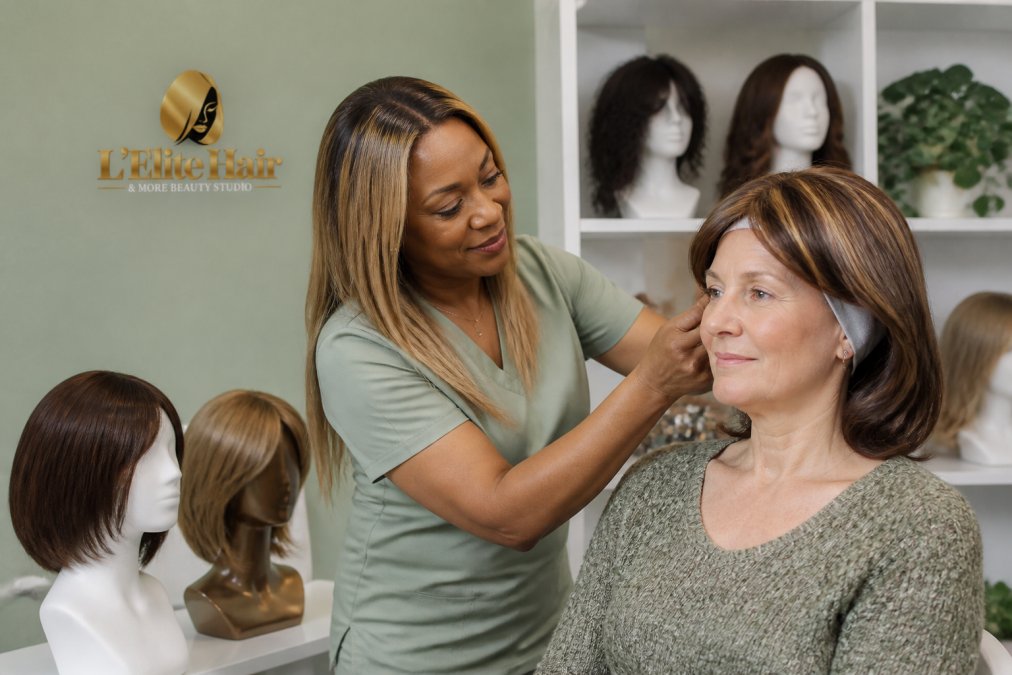
A cranial prosthesis consultation is a private, unhurried appointment where we review your history, examine your scalp, and discuss what you want to see in the mirror. It is not a sales pitch. We ask about your treatment timeline, sensitivity, styling habits, and budget comfort level, then explain your options in plain language. Linda E., a Certified Cranial Prosthesis Specialist and Medical Social Worker, leads these consultations with education first.
How a Microscopy Scalp Analysis Guides Your Medical Wig Fitting
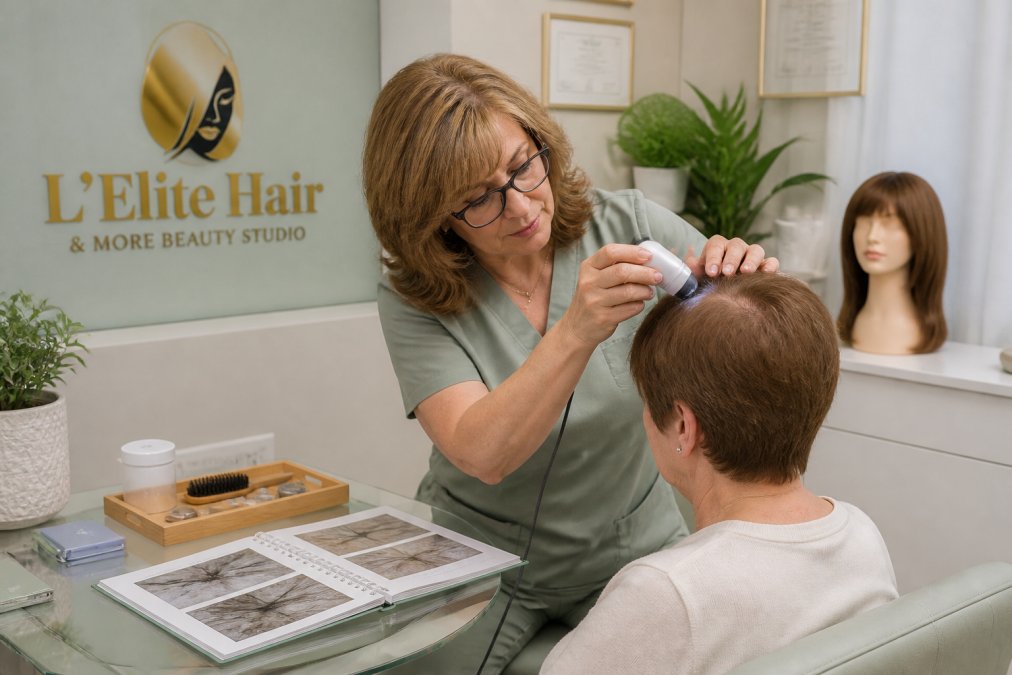
Microscopy scalp analysis uses a magnified camera to show hair density, follicle condition, and scalp buildup before any cap touches your head. That view changes the fitting. A scalp recovering from chemotherapy-induced hair loss needs a breathable cap and gentle silicone grip, not adhesive tape. Someone with alopecia areata and partial hair loss may need a lace front for a natural hairline.
Matching the Wig to Your Hair Loss Severity and Cap Construction
Cap construction decides comfort more than fiber ever will, and it is the single biggest reason a medical wig either becomes part of your morning routine or stays in the box. Before we talk fiber, we map three things: how much scalp needs coverage, how sensitive that scalp is right now, and how you want to wear the piece, all day at work, a few hours for events, or under a hat during treatment.
The four cap builds you will hear about
Monofilament base, hand-tied. Each strand is tied by hand into a fine mesh, so the hair moves in multiple directions and the part looks like it grew from your own scalp. The mesh is soft, which matters when the scalp is tender after chemotherapy or during a flare. It is the most breathable of the realistic-looking bases and the most forgiving against sensitive skin.
Full wig, topper, or partial piece
Not every client needs a full wig, and recommending one when a topper would do is a disservice. A full wig covers the entire scalp and is the right call for total hair loss from chemotherapy, advanced alopecia totalis, or widespread thinning. A topper integrates with your own hair at the crown and blends at the part, ideal for androgenetic alopecia, early-stage thinning, or postpartum shedding where the front hairline is intact.
Human hair versus synthetic fiber
Human hair moves, colors, and heat-styles like your own. It can be cut, curled, and flat-ironed, and it takes color. It also requires more care, reacts to humidity, and needs restyling after washing. Synthetic fiber holds its shape, resists humidity, and needs almost no styling, shake it out and go. It cannot take high heat, and it will not match a color change later. Neither is better.
Matching severity to build
| Hair Loss Pattern | Recommended Cap | Why It Works |
|---|---|---|
| Full coverage after chemotherapy | Monofilament base, hand-tied | Soft against a tender scalp, natural multi-directional part |
| Partial thinning at the crown | Lace front with wefted back | Breathable, blends with existing hair, natural front hairline |
| Diffuse thinning, active lifestyle | Breathable cap with silicone grip | Secure without adhesives, easy on and off |
| Temporary stress-related shedding | Lightweight synthetic on a basic cap | Affordable bridge while regrowth is monitored |
| Androgenetic alopecia, intact hairline | Topper or integration piece | Adds density at the part without covering healthy hair |
Density, color, and hairline, the details that sell the fit
Density is how much hair is on the cap, and it is where most first-time buyers go wrong. A density that is too heavy reads as a wig from across the room. Color should be matched in daylight, not under salon lighting, and a slight root shadow or highlight usually blends better than a flat single tone. For the hairline, a lace front with bleached knots gives the softest transition; a polyurethane edge is more durable but reads more solid.
Working With a Hair Loss Specialist Through a Life Transition
A hair loss specialist does more than fit wigs. We help you through the transition itself: the first look in the mirror, the first public outing, the first time someone compliments your hair without knowing. Linda's social work background shapes how these appointments run. No rushing. No judgment. We talk about what you are comfortable with before we touch a single strand.
Scalp Wellness and Hygiene Before and After Fitting
Healthy-looking hair starts with a healthy scalp environment. Before fitting, we recommend a gentle cleanse and a scalp wellness consultation if you have buildup, flaking, or irritation. After fitting, clean your scalp regularly and let it breathe between wears. A deep scalp detox or customized herbal scalp treatment supports scalp balance without stripping it. Never sleep in a bonded wig, and check for redness or tenderness at the cap edge.
Insurance, Budget Tiers, and Emotional Support Alongside Fitting
This is the part of the process most guides skip, and it is the part that determines whether a medical wig actually happens. Three things run in parallel: what your plan will cover, what you can spend, and how you feel about all of it.
How insurance treats a cranial prosthesis
Some health plans classify a cranial prosthesis as durable medical equipment when hair loss is caused by a medical condition, which may open a reimbursement pathway. Coverage varies widely by plan, and the difference between a plan that reimburses and one that does not often comes down to documentation, not the diagnosis itself. The most common reasons a claim is denied are missing paperwork, a wig purchased before approval, and a product code that does not match what the plan expects.
What to gather before you buy
A written quote from the provider, itemized by product and fitting service. A prescription or letter of medical necessity from your treating physician that states the medical reason for the prosthesis. The correct billing codes for the cap type and any cranial prosthesis fitting. A receipt that matches the quote. And a pre-authorization or predetermination request submitted before the purchase, when the plan allows it.
A simple letter-of-medical-necessity framework
A letter of medical necessity does not need to be long. It needs to connect the diagnosis to the prosthesis. A useful structure is: the patient's name and date of birth; the diagnosis and the date it was confirmed; a statement that the hair loss is a result of that diagnosis or its treatment; a statement that the cranial prosthesis is medically necessary to address the hair loss; the recommended product type; and the physician's signature, license number, and date.
Budget tiers without compromising the fit
A medical wig is not a single price point, and the fitting is what makes a piece wearable. A reasonable approach is to think in tiers. An entry tier uses a lightweight synthetic piece on a basic cap, the right choice when regrowth is expected and the piece is a bridge. A mid tier moves to a lace front or a breathable silicone-grip cap with a better fiber, which improves comfort and naturalness for daily wear.
Emotional support alongside the fitting
Ready to talk through your options? Book a medical wig consultation or a scalp wellness consultation through Vagaro, or call L'Elite Hair & More Beauty Studio to schedule a private appointment.
Frequently Asked Questions
How does a medical wig differ from a standard fashion wig?
A medical wig, often called a cranial prosthesis, is designed for people losing hair to chemotherapy, alopecia areata, autoimmune conditions, or other medical causes. It usually uses a breathable cap, softer linings, and lighter weight for scalp sensitivity, and it can sometimes be covered by health insurance when a prescription documents medical necessity. A fashion wig is built for style first, with less attention to comfort on a tender or healing scalp.
What should I expect during a professional cranial prosthesis consultation?
A cranial prosthesis consultation starts with a conversation about your health history, treatment timeline, and daily routine. Your specialist then examines your scalp, discusses cap construction options such as lace front or monofilament base, and measures your head for a custom fitting. You will also talk through hair density, color matching, and care instructions. Expect an unhurried appointment where questions are welcome and no decision is rushed.
Can stress-induced hair loss be reversed?
Hair shedding linked to stress, sometimes called telogen effluvium, often improves over time once the trigger eases, though timelines vary by person. A hair loss specialist can help you track shedding, review scalp condition, and support a healthy scalp environment while you recover. If shedding is sudden, patchy, or continues for months, see a dermatologist or licensed healthcare professional for evaluation.
Can scalp wellness treatments support hair health during periods of high stress?
Professional scalp wellness services such as deep scalp detox, gentle massage, and customized herbal treatments help maintain a healthy scalp environment, which supports healthy-looking hair. They do not cure medical hair loss or regrow hair on their own. Many clients find that regular scalp care, combined with stress management and guidance from a qualified professional, helps them feel more in control during a difficult season.
How do I prepare for a medical wig fitting appointment?
Arrive with clean, product-free hair if possible, and bring photos of styles you like plus any wigs you already own. Write down your medical timeline, medications, and insurance details if you plan to seek reimbursement. Wear comfortable clothing, and bring a supportive friend if that helps. If your scalp is sensitive from treatment, let your specialist know at the start so the fitting can be adjusted for comfort.
Are there specific scalp care practices for hair loss caused by life transitions?
During life transitions such as a move, divorce, grief, or a demanding new role, keep scalp care simple and consistent. Wash gently with mild products, avoid tight hairstyles and harsh chemical treatments, and protect your scalp from sun exposure. Schedule a microscopy scalp analysis if you notice changes in density or shedding. A hair loss specialist can build a personalized plan that fits your routine.
Hair loss from illness, stress, or a life transition can feel like losing control of your own reflection. At L'Elite Hair & More Beauty Studio, Linda E. brings cosmetology, trichology, and social work together through microscopy scalp analysis, personalized cranial prosthesis consultations, and scalp wellness care that supports healthy-looking hair. Book a medical wig consultation through Vagaro, call the studio, or schedule a scalp wellness consultation to start with education, not pressure.