 ultimate-guide
Scalp Wellness Treatment: A Complete 2026 Guide
Table of Contents
- What a Scalp Wellness Treatment Actually Is
- Microscopy Scalp Analysis: Seeing Your Scalp Before You Treat It
- Scalp Detox Treatment: Clearing Buildup, Sebum, and Mineral Deposits
- The Japanese Head Spa Bonita Springs Clients Ask About
- Working With a Hair Loss Specialist in Southwest Florida
- Who Should Avoid a Scalp Wellness Treatment
- Keeping Your Scalp Healthy Between Professional Treatments
- Frequently Asked Questions
Last Updated: September 13, 2026
What a Scalp Wellness Treatment Actually Is
A scalp wellness treatment is a professional service that cleanses, exfoliates, and rebalances the scalp so hair can grow in a healthier environment. At L'Elite Hair & More Beauty Studio, we treat the scalp as the foundation: when it is congested, dry, or irritated, hair looks dull and sheds more than it should.
The scalp is skin, and it deserves the same attention you give your face. A scalp wellness treatment typically combines manual exfoliation, gentle massage, targeted cleansing, and hydration. Some studios add LED light, herbal masks, or steam.
What separates a real treatment from a shampoo is assessment: a professional looks at your scalp before touching it, then builds the service around what they see.
Microscopy Scalp Analysis: Seeing Your Scalp Before You Treat It
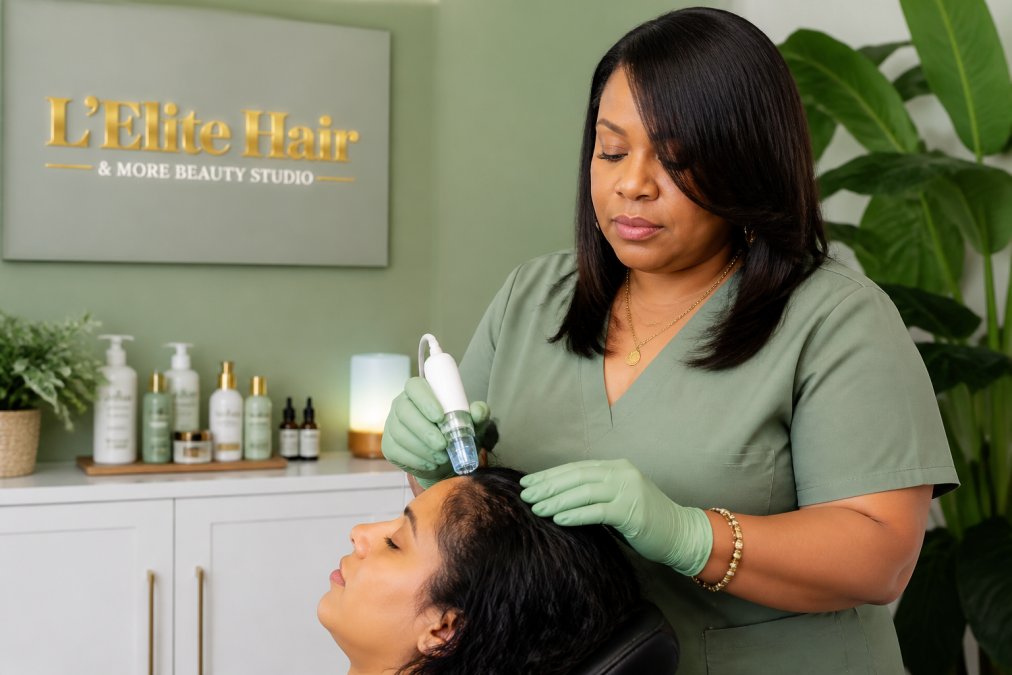
Microscopy scalp analysis uses a magnifying camera to photograph the scalp and hair follicles up close, turning guesswork into a visual record you can compare over time.
Most people arrive convinced they know their problem. In practice, what they describe and what the camera shows are often two different things. Buildup that looks like dandruff may be product residue. Thinning at the part line may be breakage, not follicle loss.
A proper analysis looks at:
- Follicle density and how hairs emerge from each opening
- Flaking, redness, or irritation across the scalp barrier
- Sebum levels, from dry patches to oily zones
- Product buildup and follicle congestion around the hairline
The images become your baseline. That objectivity is why we start here rather than jumping straight into a service.
Scalp Detox Treatment: Clearing Buildup, Sebum, and Mineral Deposits
A scalp detox treatment removes the accumulation that regular shampooing leaves behind. Over time, styling products, dry shampoo, hard-water mineral deposits, and excess sebum settle on the scalp and around the follicle opening.
That layer traps debris against the skin and can leave hair looking flat and weighed down. A detox addresses both.
Professional detox typically involves a clarifying cleanse, exfoliation to lift dead skin, and a treatment mask to restore hydration. The goal is balance, not stripping. An over-cleansed scalp produces more oil to compensate, which is why harsh daily clarifying at home backfires.
According to [American Academy of Dermatology guidance on hair and scalp care(https://lelitehairbeautystudio.com/scalp-care) | aad.org], how you wash and care for your scalp matters as much as what you put on your hair. That is the principle behind a structured detox: cleanse thoroughly, then replenish.
If you have a diagnosed scalp condition like seborrheic dermatitis or eczema, tell your provider first. A detox can support comfort, but active flares need a dermatologist's input.
The Japanese Head Spa Bonita Springs Clients Ask About
A Japanese Head Spa is a multi-step scalp and hair treatment built around warm water, gentle massage, and deep cleansing. Clients in Bonita Springs ask about it because it treats scalp care as both therapeutic and deeply relaxing, with a level of precision most Western wash-and-go services skip entirely.
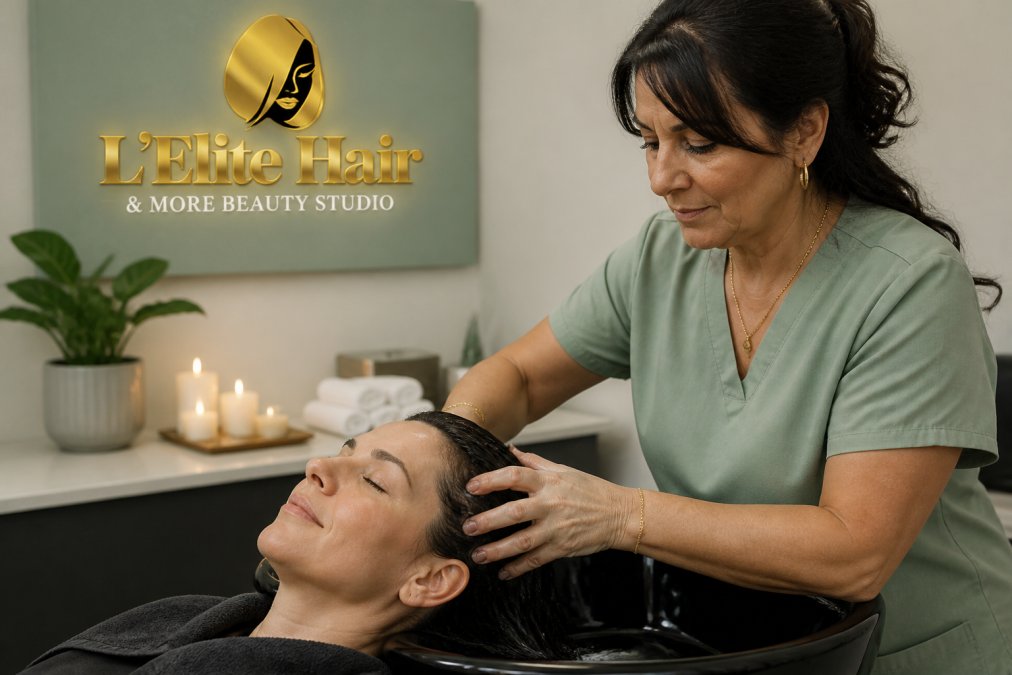
The service usually moves through several stages, and the order matters:
- Scalp analysis. A magnifying camera or visual check establishes a baseline before any water touches your head, so a provider can decide whether your scalp needs clarifying, calming, or hydrating, three very different directions.
- Warm-water cleanse. Water is kept comfortably warm, not hot. Hot water strips the scalp's natural lipid barrier and can trigger rebound oil production, so temperature control is part of the treatment (the American Academy of Dermatology).
- Exfoliation. A gentle physical or enzymatic exfoliant lifts dead skin cells and loosened buildup from around the follicle opening without scratching the scalp surface.
- Massage sequence. The practitioner works the scalp, temples, neck, and shoulders. Sustained massage supports scalp circulation and helps loosen buildup that shampoo alone leaves behind.
- Steam or mask. Steam opens the follicle area and softens sebum; a hydrating or herbal mask then replenishes what the cleanse removed. The goal is balance, not stripping.
- Rinse and finish. A thorough, cool-to-warm rinse removes residue, followed by a light scalp treatment or leave-in if your scalp runs dry.
Why the sequence works. The scalp sits at a slightly acidic pH, and the microorganisms that live there, the scalp microbiome, thrive in that environment. When harsh cleansers, heavy product residue, or hard-water minerals disrupt that balance, the scalp can respond with flaking, irritation, or excess oil. A well-run head spa supports the scalp's natural environment rather than fighting it: gentle surfactants instead of harsh sulfates, warm rather than hot water, and replenishment after cleansing.
What you may notice afterward. Most clients describe lighter-feeling hair and a calmer scalp. Results are cumulative, a single session feels good, but a monthly rhythm supports a stable scalp environment between visits.
Who tends to benefit most. Clients with product buildup from styling routines, hard-water exposure, seasonal flaking, or simply a desire for a genuinely relaxing service that also does something for their scalp. If you are also concerned about shedding or thinning, the head spa pairs naturally with a scalp wellness consultation so relaxation and assessment happen in the same visit.
At L'Elite, the Japanese Head Spa is one of our most requested services. Linda E. is a Certified Japanese Head Spa Specialist and Certified Indian Head Massage practitioner, so the massage portion is delivered with trained technique rather than a generic wash. If you have been searching for a Japanese Head Spa in Bonita Springs, this is the service clients travel from Naples, Estero, and Fort Myers to book.
Working With a Hair Loss Specialist in Southwest Florida
A hair loss specialist evaluates the scalp, hair density, and shedding pattern, then recommends next steps, professional scalp care, a change in your home routine, or a referral to a dermatologist.
Not every case of shedding is the same, and some causes sit outside what a salon or trichology practice can address. Sudden, patchy, or rapidly progressing hair loss deserves medical evaluation, and a good specialist says so rather than selling you a package.
What a specialist can do:
- Document your scalp and hair with microscopy so changes are measurable
- Identify buildup, irritation, or styling damage that contributes to breakage
- Build a personalized hair and scalp wellness plan
- Discuss medical wigs and cranial prosthesis options when regrowth is not the goal
- Refer you to a licensed healthcare professional when a concern needs diagnosis
Linda E., our founder, is a licensed cosmetologist and certified trichologist, and she also brings a medical social work background to consultations. That combination matters when clients are navigating hair loss from chemotherapy, stress, or a major life transition. The conversation is about options and education, not pressure.
Who Should Avoid a Scalp Wellness Treatment
Scalp wellness treatments are not appropriate for everyone at every moment.
Postpone a treatment if you have:
- An active scalp infection, open sores, or a contagious skin condition
- A recent chemical burn, sunburn, or irritation flare on the scalp
- Had a recent scalp procedure or surgery without clearance from your doctor
- A known allergy to ingredients used in a proposed mask or treatment
Pregnancy, certain medications, and active cancer treatment are not automatic disqualifiers, but they change what is appropriate. Tell your provider about your health history, medications, and any diagnosed condition before the service begins.
If you are unsure whether a service is safe for you, ask your physician or dermatologist rather than guessing. A reputable provider will ask about contraindications upfront and adjust or decline the service when needed.
Keeping Your Scalp Healthy Between Professional Treatments
Between appointments, your home routine does most of the work. Professional treatments reset the scalp; daily habits determine whether it stays balanced. The weeks between visits are where scalp wellness is actually won or lost.
The first 72 hours after a professional treatment
Your scalp has just been exfoliated, massaged, and replenished. Treat it gently for a few days:
- Skip harsh clarifying shampoos for at least three days. Your scalp barrier is temporarily more permeable, and stripping it now undoes the treatment.
- Avoid heavy styling products, dry shampoo, and tight styles for the same window. Let the follicle area breathe.
- Rinse with lukewarm, not hot, water. Heat is the fastest way to trigger rebound oil production.
- If your provider applied a treatment mask or serum, follow their specific aftercare instructions rather than layering on your own products.
Your weekly rhythm
A simple maintenance approach that most clients can actually sustain:
- Wash with a gentle, sulfate-free cleanser two to three times weekly, or more if you use heavy products or work out frequently
- Skip dry shampoo on consecutive days; it builds up faster than most people realize and can leave a dull film around the hairline
- Massage your scalp with fingertips for a few minutes during washing to support circulation, no need for tools or oils unless your provider recommends them
- Rinse thoroughly; leftover conditioner near the roots contributes to buildup and can make hair look flat within a day
- Avoid tight styles and tension on the hairline, especially braids, ponytails, and edges pulled back daily
- Protect your scalp from sun exposure with a hat or physical sunscreen, particularly along the part line
- Drink enough water and manage stress, both of which affect scalp health more than most people expect
The monthly and seasonal layer
Some maintenance tasks do not need to happen weekly:
- Clarifying wash every few weeks if you live in an area with hard water or use a lot of styling product. Mineral deposits from hard water build up gradually and can leave hair feeling coated even after a normal wash.
- Shower filter if hard water is a persistent issue. It will not solve everything, but it reduces daily mineral exposure.
- Seasonal adjustment. Scalps tend to run drier in winter and oilier in summer. You may need a richer scalp treatment in cold months and a lighter, more clarifying routine in humid ones.
- Re-check with microscopy every eight to twelve weeks if you are actively working on a concern like buildup, flaking, or shedding. Comparing images over time is the only objective way to know whether your routine is working.
The microbiome angle most routines ignore
Your scalp hosts a community of microorganisms that help keep it balanced. Harsh daily clarifying, antibacterial-heavy products, and constant product layering can disrupt that community and lead to the exact flaking and irritation people are trying to fix. The goal is not a sterile scalp, it is a balanced one. Gentle, consistent care almost always outperforms aggressive treatment.
According to Cleveland Clinic overview of scalp and hair health, most scalp concerns respond well to consistent, gentle care and prompt attention to irritation rather than aggressive treatment. Consistency beats intensity.
What you can safely do at home
For some clients, a DIY scalp mask with ingredients like aloe, honey, or diluted apple cider vinegar supports comfort between visits. A few ground rules:
- Patch test anything new on your inner arm first
- Skip anything that stings or burns, a tingling sensation is not a sign it is working
- Do not apply essential oils undiluted; carrier oil or a proper dilution is not optional
- If you have a diagnosed scalp condition, ask your provider or dermatologist before adding home treatments
When to book your next appointment
A reasonable rhythm for most clients is a professional scalp treatment every four to six weeks, with a microscopy re-check every eight to twelve weeks if you are tracking a specific concern. If you notice new flaking, irritation, or a change in shedding between visits, do not wait for your next appointment, call and describe what you are seeing. Sudden or unexplained changes deserve a professional look, and sometimes a referral to a dermatologist.
Frequently Asked Questions
What is a professional scalp wellness treatment?
It is a professional service that focuses on the condition of your scalp rather than just your hair strands. A typical session includes a scalp assessment, deep cleansing to lift product buildup and mineral deposits, exfoliation, massage to support scalp circulation, and a nourishing finish. Depending on your concerns, it may also include LED hair therapy or customized herbal treatments. The goal is to help maintain a healthy scalp environment that supports healthy-looking hair, not to diagnose or cure medical conditions.
How often should you get a scalp detox treatment?
Frequency depends on your scalp type, product use, and goals. Many people schedule a scalp detox treatment every four to six weeks, which aligns with a typical hair growth cycle. If you use heavy styling products, live in a humid climate, or deal with persistent flaking, you may benefit from more frequent visits at first. A professional can assess your scalp and recommend a schedule. At-home care between appointments helps you maintain results.
What are the benefits of a microscopy scalp analysis?
A microscopy scalp analysis uses a magnified camera to show you the actual condition of your scalp: buildup around the follicle, dryness, redness, oiliness, or thinning areas. Seeing this on screen makes it easier to understand why your scalp behaves the way it does and which services make sense. It also creates a baseline so you can track changes over time. If the analysis reveals something that needs medical evaluation, a trichologist can refer you to a dermatologist or physician.
Can scalp wellness treatments help with hair thinning?
Scalp wellness treatments support a healthy scalp environment, which is one factor in healthy-looking hair. Deep cleansing removes buildup that can congest the follicle area, massage supports scalp circulation, and proper hydration helps the scalp barrier. Thinning hair has many causes, including genetics, medical conditions, stress, and nutritional factors. A scalp wellness treatment is not a treatment for hair loss. A hair loss specialist can help you understand your options and refer you to a healthcare professional when needed.