 ultimate-guide
What Causes Itchy Scalp and Hair Loss? A 2026 Guide
Table of Contents
- Why an Itchy Scalp and Hair Loss Often Show Up Together
- Common Causes of Itchy Scalp and Hair Loss
- Signs of Scalp Inflammation You Should Not Ignore
- Nutrition, Stress, and Hormones: Causes Many People Miss
- What a Scalp Analysis in Bonita Springs Can Reveal
- Holistic Scalp Detox Benefits for Itchy, Thinning Hair
- How to Maintain a Healthy Scalp Environment at Home
- When to See a Dermatologist, and How We Support You
- Frequently Asked Questions
Last Updated: September 15, 2026
Why an Itchy Scalp and Hair Loss Often Show Up Together
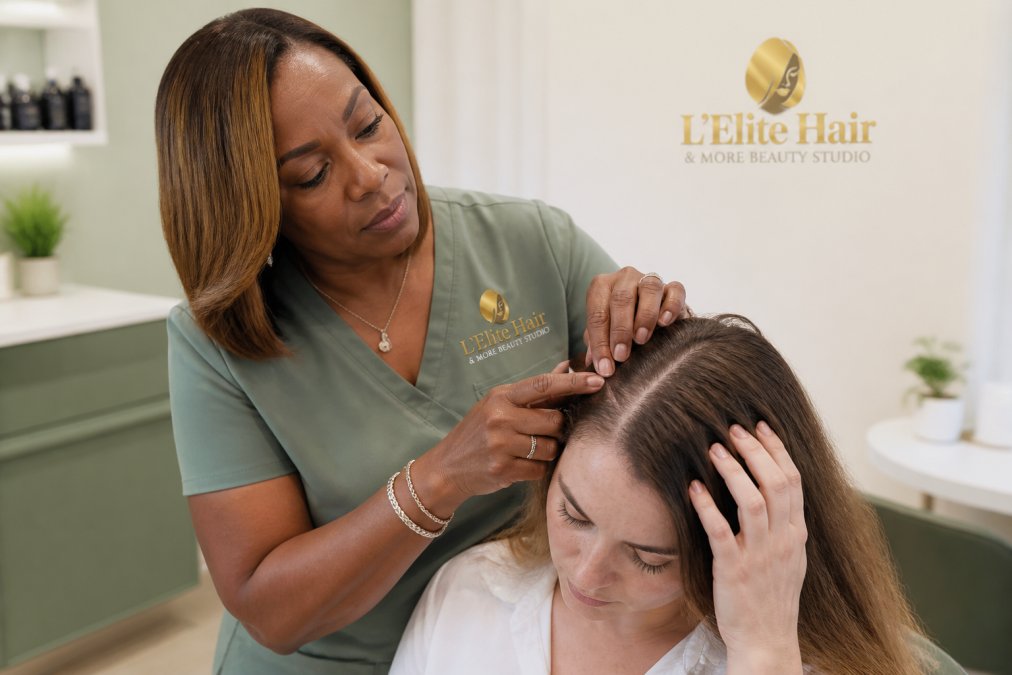
An itchy scalp and hair loss frequently appear together because both point back to inflammation at the follicle. When the scalp barrier is disrupted, the same irritation that makes you scratch also disturbs the hair growth cycle. At L'Elite Hair & More Beauty Studio in Bonita Springs, we see this pairing constantly, and it is rarely a coincidence.
Pruritus is the clinical term for that persistent itch. It signals that something is irritating the skin: excess sebum, a reaction to a product, or an overgrowth of yeast. Scratching then damages the hair shaft and inflames the follicle further.
Below, we'll walk through the most common causes, the warning signs worth taking seriously, and the at-home habits that help maintain a healthy scalp environment.
Common Causes of Itchy Scalp and Hair Loss
The causes of an itchy scalp with shedding fall into a handful of categories, and identifying which one applies to you is the first real step. Some are cosmetic and manageable at home. Others need a dermatologist.
Dandruff and Seborrheic Dermatitis
Dandruff is a mild form of seborrheic dermatitis, a condition driven by yeast on the scalp and excess sebum production. It produces flaking, scaling, and itching, often along the hairline and behind the ears.
Seborrheic dermatitis tends to flare with stress and cold weather. An antifungal shampoo containing ketoconazole or zinc pyrithione is the standard starting point, per American Academy of Dermatology guidance on dandruff. When flaking is heavy and the itch will not quit, that is a sign to get it looked at.
Scalp Psoriasis and Tinea Capitis
Scalp psoriasis shows up as thick, silvery scaling with erythema and crusting, and it can extend past the hairline onto the neck. It is an immune-driven condition, not a hygiene problem, and it can cause temporary hair thinning where plaques are dense.
Tinea capitis is a fungal infection, most often seen in children, that causes round patches of scaling and broken hairs (the CDC). It requires oral antifungal treatment, not a shampoo. If you see a defined bald patch with black dots at the surface, see a doctor.
Alopecia Areata, Folliculitis, and Allergic Contact Dermatitis
Alopecia areata is an autoimmune condition that produces smooth, round bald patches. The scalp may tingle or itch before a patch appears, which is why people often notice the itch first.
Folliculitis is inflammation of the hair follicle itself, usually from bacteria or friction, and it looks like small red bumps. Allergic contact dermatitis is an irritant reaction to ingredients in hair dye, fragrance, or shampoo. It causes itching, redness, and sometimes a burning sensation within hours or days of use.
Signs of Scalp Inflammation You Should Not Ignore
Most itchy-scalp articles hand you a symptom list and stop there. What they rarely give you is a way to sort those symptoms into "watch it," "treat it gently at home," and "get this looked at now." That sorting step is where people either panic unnecessarily or wait too long. Here is a practical way to read what your scalp is telling you.
The Three-Tier Triage
Tier 1, Cosmetic irritation (manage at home, reassess in two weeks). Fine, dry flaking that brushes off easily. Itch that comes and goes and is worse on unwashed days. Mild tightness after washing. No redness, no sores, no patchy shedding. This pattern usually responds to a gentler wash routine, less heat, and looser styles.
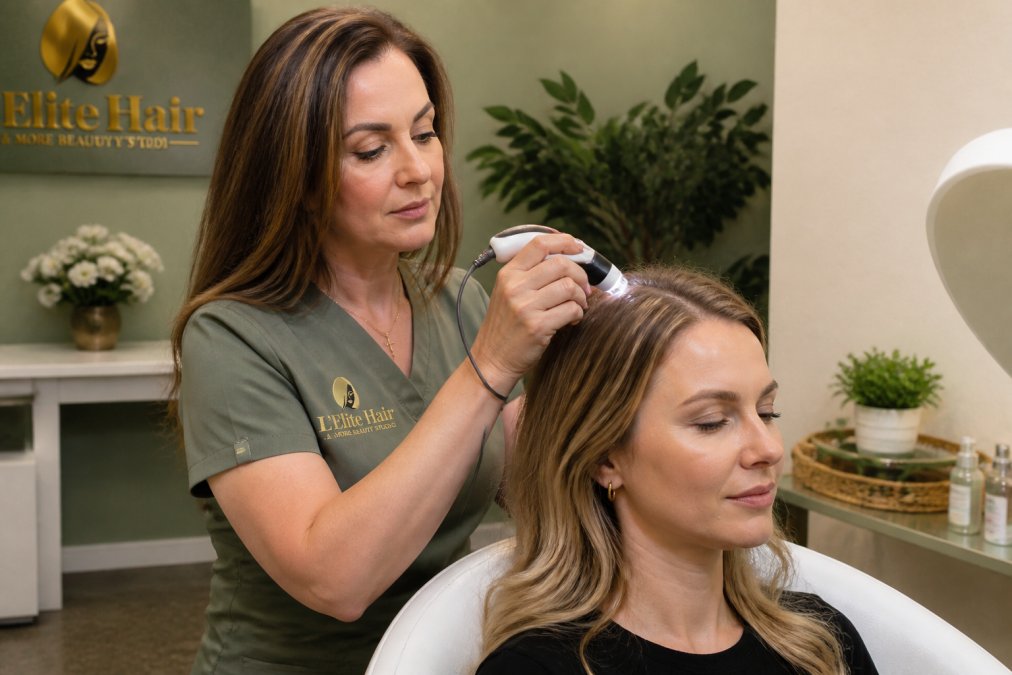
Tier 2, Persistent inflammation (book a professional scalp assessment). Redness that stays in the same area. Scaling that returns within days of washing. Itch that survives a gentle shampoo swap. Gradual thinning along the part or hairline. This is the zone where a magnified scalp analysis earns its keep, it shows buildup, follicle density, and surface condition that you simply cannot see in a mirror.
Tier 3, See a dermatologist. Sudden or patchy shedding. Pain or burning rather than itch. Sores, weeping, crusting, or pus around follicles. A defined bald spot with broken hairs or black dots at the surface. Scalp tenderness so pronounced that brushing hurts. Any of these can point to conditions that need medical evaluation, not a shampoo.
Why the Timeline Matters More Than the Symptom
A single flaky week after a new dry-shampoo habit is not the same as six weeks of the same redness creeping outward. Inflammation that persists past roughly two to three weeks of gentle care is the point where self-treatment stops being reasonable. The longer inflammation sits at the follicle, the more it can interfere with the growth cycle, and follicles that might have recovered with early care are the ones most at risk from delay.
What to Track Before Your Appointment
You will get far more out of any consultation, cosmetic or medical, if you arrive with notes. Jot down:
- When the itch started and whether it is constant or episodic
- Whether shedding is diffuse or in patches
- Products introduced in the eight weeks before symptoms began
- Recent illness, major stress, medication changes, or hormonal shifts
- Whether anyone else in the household has similar flaking (relevant for contagious fungal causes)
Nutrition, Stress, and Hormones: Causes Many People Miss
The scalp is skin, and skin is a mirror for what is happening inside the body. Most ranking articles stop at "see a doctor" when it comes to internal causes. That is fair advice, but it leaves readers without the mechanism, and without the mechanism, you cannot tell whether your situation is worth a blood panel, a product audit, or both.
How Nutrient Shortages Reach the Follicle
Hair is one of the body's least essential tissues. When resources run short, the body diverts them to organs that keep you alive, and the follicle gets what is left. That is why nutritional shedding tends to be diffuse rather than patchy, it affects the whole scalp, not one spot.
- Iron and ferritin. Iron carries oxygen to rapidly dividing cells, and hair follicle cells divide faster than almost any other tissue. Low ferritin stores are a common finding in women with unexplained thinning, even when hemoglobin is normal. This is why a standard blood count can look fine while ferritin is low, the two are not the same test.
- Vitamin D. Vitamin D receptors are present in the hair follicle, and the vitamin plays a role in immune regulation and the scalp barrier.
The Cortisol-Scalp Connection
Hormones Worth Ruling Out
The Ingredient Blacklist Most Articles Skip
What a Scalp Analysis in Bonita Springs Can Reveal
Holistic Scalp Detox Benefits for Itchy, Thinning Hair
How to Maintain a Healthy Scalp Environment at Home
When to See a Dermatologist, and How We Support You
Frequently Asked Questions
Can an itchy scalp lead to permanent hair loss?
An itchy scalp alone does not cause permanent hair loss. The concern is what drives the itch. Conditions like alopecia areata, scalp psoriasis, or long-term folliculitis can damage hair follicles if they go unmanaged, and constant scratching can injure the scalp barrier. Most people who address the underlying cause early keep their hair. If itching lasts more than two weeks or comes with patchy thinning, scaling, or crusting, have a dermatologist evaluate it.
What vitamin deficiency causes itchy scalp and hair loss?
Iron deficiency is the deficiency most often linked to both itching and shedding, and low vitamin D and zinc levels are also associated with scalp and hair concerns. These problems cannot be confirmed by how your scalp feels, only by blood work ordered by a physician. If a deficiency is found, treatment belongs with your doctor. In the studio, we focus on scalp hygiene, gentle professional care, and personalized hair and scalp wellness recommendations.
What are the most common triggers for scalp inflammation?
The usual triggers are excess sebum production, product buildup, harsh sulfates or fragrances, fungal overgrowth, stress, and hormonal imbalance. Allergic contact dermatitis from hair dye or shampoo preservatives is also common. A scalp analysis in Bonita Springs can help you see whether buildup, redness, or scaling is present so you can adjust your routine with guidance instead of guessing.
When should I see a dermatologist for scalp itching and hair thinning?
Book a dermatologist if you notice expanding bald patches, pus, open sores, severe pain, sudden heavy shedding, or itching that does not improve after a few weeks of gentle scalp care. A dermatologist can diagnose conditions such as seborrheic dermatitis, tinea capitis, or alopecia areata and prescribe topical treatments or corticosteroids when needed. At L'Elite, we support scalp wellness alongside that care and refer you when a concern falls outside our scope.
An itchy scalp paired with hair loss is frustrating, and it is easy to feel like you have tried everything. L'Elite Hair & More Beauty Studio takes a different approach: assess first, educate always, and recommend only what fits your scalp. With microscopy scalp analysis, customized herbal scalp treatments, and LED hair therapy, we help you understand what is happening and what to do next. Get started with L'Elite and take the first step toward a calmer, healthier-feeling scalp.